Showing posts with label Martha Washington. Show all posts

Saturday, January 21, 2023

Historic Places: Mount Vernon


I recently made my fifth visit to Mount Vernon, the beloved home of George and Martha Washington. Each visit has included its own special element - a trip with my oldest son, one with my daughter, mint juleps just like George Washington used to drink, and the time I got to introduce my husband to one of my favorite places in the country. This time, I got to bring my book that includes my own little chapter about Martha Washington and her life spent mostly in this beautiful place. We also took an in-depth tour and got to see parts of the home that I hadn't seen before.

I'm excited to share it with you!

Scaffolding is often seen against one of the walls of Mount Vernon. This time, it was all along the portico facing the Potomac River, so the facade of the mansion was pristine.
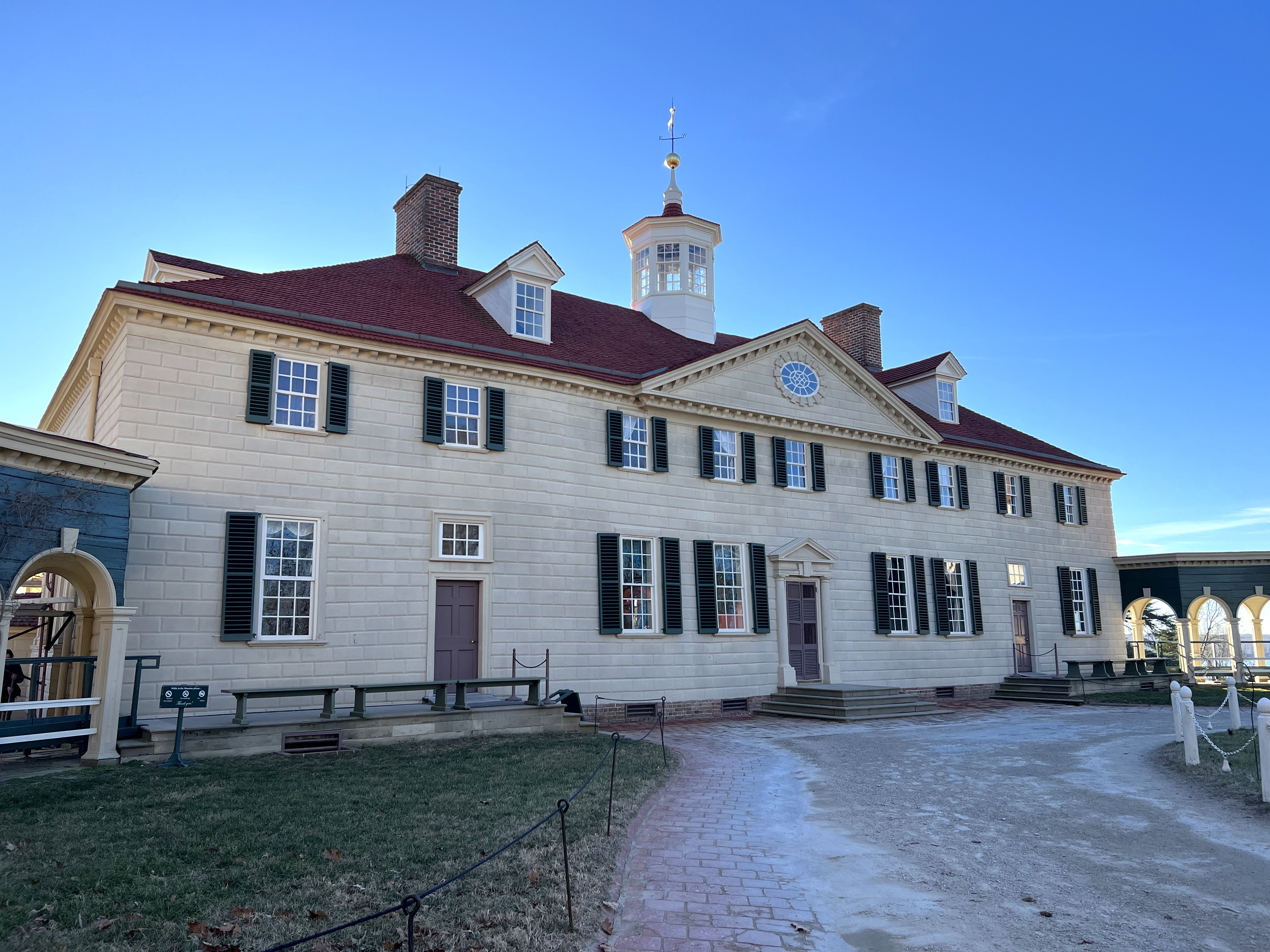

The exterior of the home is sided in wood planks that are painstakingly prepared to give the illusion of stone. A special paint blended with sand is used to create this effect, just as it was in the 18th century. The estate has been restored by the Mount Vernon Ladies' Association to appear as it did in 1799, the final year of George Washington's life, but this is not how it appeared when he first inherited it. For a great overview of the evolution of Mount Vernon and George Washington's passion for improving the home and grounds, visit Mount Vernon's website which makes a vast amount of information available to the public

Inside, there is far too much for me to include in a single post, but the room the Washingtons were most proud of was the New Room that they built for entertaining in European style (they hoped, neither of the Washingtons ever traveled to Europe).


This room has a ceiling twice as high as any others in the home and was larger than the entire home of most other Virginians of Washington's time. Hints of George's love of farming and his belief in America's future as an agricultural nation are found all around, including this marble mantlepiece that was designed by him.


Other rooms that may be of particular interest to my readers include the Lafayette Room, where the Marquis de Lafeyette stayed while visiting the Washingtons. The portrait of the Marquis is a reproduction of one that George had commissioned to honor his friend.
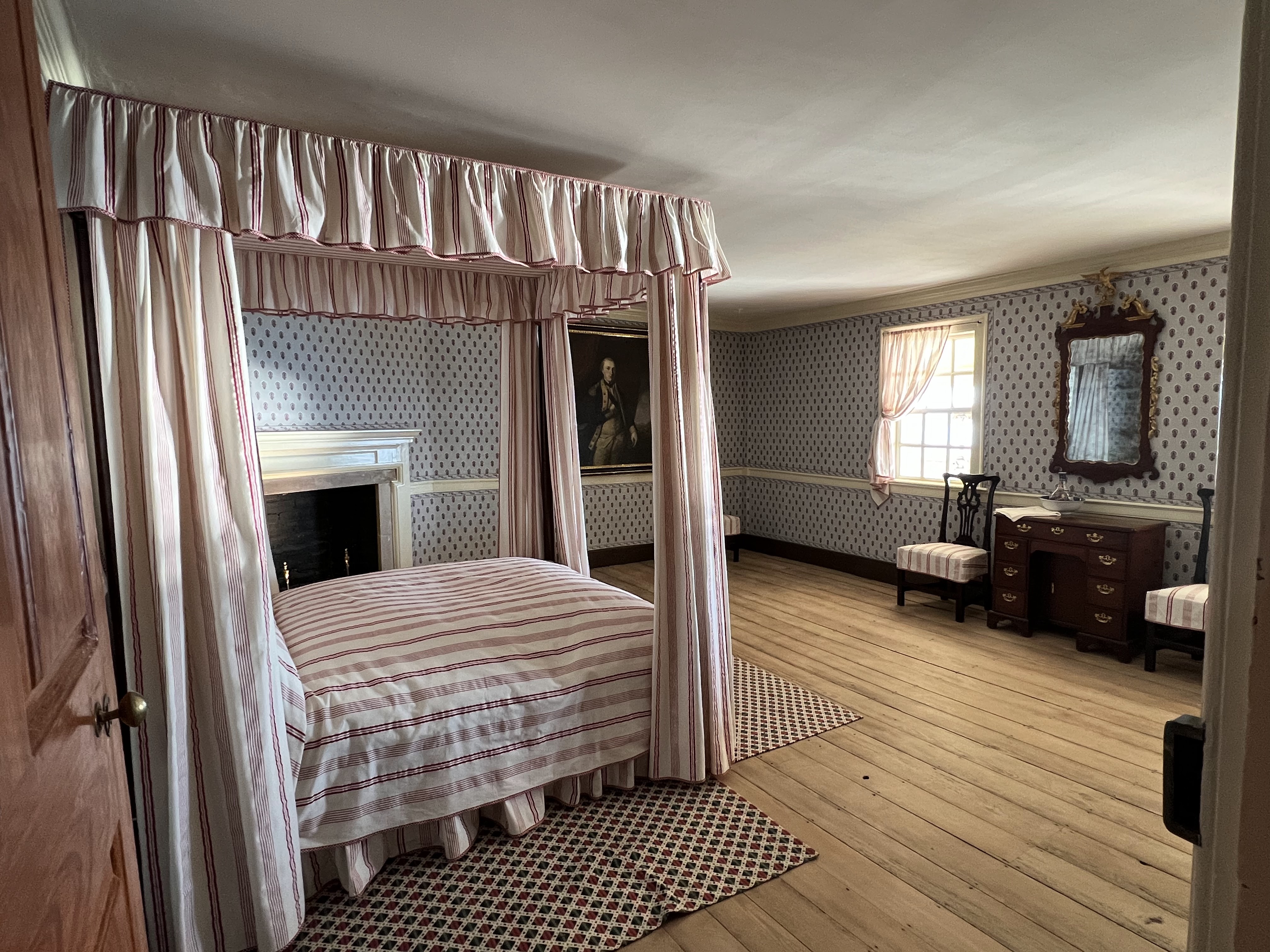

Another room that I mention in Women of the American Revolution is the third floor guest room where Martha moved to after George's death. She never again slept in the bed they had shared.


The Mount Vernon Ladies' Association has performed an astonishing amount of research to determine which guest bedroom Martha used, what paper was on the walls, and all sorts of other facts that we take for granted when we visit Mount Vernon today. The estate was in ruins when they purchased it in 1859. 

I've discovered a fun fact connecting this to my current project on James Hamilton!


Mary Morris Hamilton, James's daughter, was the MVLA's first vice-regent for New York, and she raised about $40,000 of the estate's $200,000 purchase price. I can't wait to include more about her story in my next book! Needless to say, I have a greater appreciation for what these women went through than ever before.

I will share one more fun picture for those who are fans of the National Treasure movies.


You may recognize this cornerstone as the entrance to a secret passage. (We were assured that it is not.) It is a cornerstone believed to have first been used by George's grandfather, Lawrence Washington, to establish the family in Virginia. Mount Vernon researchers believe the cornerstone was preserved and moved until it was eventually installed in the Mount Vernon cellars when George Washington had them built. The one currently in place is actually a replica, but the original is in the on-site museum, which you absolutely must visit if you ever take a trip to Mount Vernon.

I have so many photos and will be sharing more on Instagram


If you would like to learn more about Martha Washington and other amazing 18th century ladies, please consider my newest book, Women of the American Revolution. It is available at Pen & Sword, Amazon, Book Depository, Barnes & Noble, or your favorite book retailer. I appreciate your interest and support!

Available now at Audible and audiobooks.com!

I also have a few other articles written about Martha here.

Join me on your preferred social media for daily fun facts, on this day in history posts, and lots of pictures!

Facebook

Instagram

Twitter

Sunday, January 1, 2023

Freedom for Washington's Slaves


On New Year's Day 1801, Martha Washington granted freedom to a portion of Mount Vernon's enslaved population. An excerpt from Women of the American Revolution

"George had left Martha with a difficulty in his will. Over time, he had begun to struggle with the institution of slavery in a way that Martha never did, and he had granted his slaves their freedom upon Martha’s death. He might have meant for this to free Martha from the responsibility of coping with their emancipation, but it created a difficult situation where some of the Mount Vernon enslaved people knew their freedom was based on the elderly lady’s death. In addition to that awkward challenge, the enslaved populations of the Washington and Custis estates had become intermingled during George and Martha’s long marriage. Those that were a part of the Custis inheritance would legally transfer to Martha’s grandchildren upon her death, while those that had been George’s would be free. That not only seemed arbitrary and unfair but also left black families with some members anticipating freedom and others not.

Martha attempted to ease this tense situation by freeing George’s slaves on 1 January 1801. She was afraid that some of the enslaved people plotted her death in order to gain their freedom, so she gave it to them. Some eagerly took up their newfound liberty and left Mount Vernon, others stayed because of family who remained property or for the stability Mount Vernon offered. Her thoughts about this event are not recorded, but Martha had previously expressed shock and dismay when enslaved servants ran away. She did not understand why they would choose an uncertain freedom over the life offered at Mount Vernon. For a woman who had been part of a lengthy revolution based on liberty, it is an ironic blind spot."


Learn more about Martha Washington and other 18th century ladies in Women of the American Revolution. Available at AmazonPen & SwordBook DepositoryBarnes & Noble, and other major book retailers. Also available now at Audible and audiobooks.com!


Saturday, May 22, 2021

The Grief of Martha Washington


Martha Washington is primarily remembered for her husband's sake, a truth she would be accepting of as a devoted 18th century wife. She travelled through difficult terrain to join General George Washington during winter camps of the Revolutionary War and kept the family plantation, Mount Vernon, running throughout the other seasons. As America's first First Lady (not that she was ever referred to by that title during her lifetime), Martha supported her husband while setting precedents and expectations for her own role. What is less known about Martha Washington is the amount of loss that she endured through it all.

Before her beloved George, Martha was married to Daniel Parke Custis, one of the wealthiest plantation owners in Virginia. The couple was married in 1750 and had four children before Daniel died in 1757. Martha had lost one of her children in 1754 and a second died within months of her husband. Therefore, Martha, at twenty-six, was a widow who had buried two of her four children. This was not unheard of for the era, but Martha could not know what she would later face. She, like most women of the time, turned to her faith for comfort.

She did not remain single for long, as was also typical of that time when it was difficult to manage a household and raise children alone. George Washington was young and ambitious when Martha met him. His wealth was no match for the Custis lands, but he had grand plans for the future. When Martha married him 6 January 1759, she surely expected more children to follow. In this the couple were disappointed, but George treated Martha's children, John and Martha - known as Jacky and Patsy, as his own.

Martha was also the eldest of eight siblings. By the time of her marriage to George, two of them had died. Through the years, Martha buried her siblings one-by-one, outliving them all despite being the oldest. It caused her to constantly concern herself with the health of her loved ones, and most of her letters include updates on the health of those in her household and inquiries or prayers for those to whom she was writing. The hour each day that Martha spent in Scripture and at prayer included many requests for good health and recovery from illness.


When Martha realized that she would have no more children, the two that remained became even more precious to her. Patsy, who was always in delicate health, died during an epileptic seizure in 1773, sending Martha into a deep depression. She had frantically searched for a cure or treatment for her daughter's 'fits' but epilepsy was not understood in the 18th century, and Martha's daughter died at age 16. 

Only Jacky remained of Martha's four children, but his fiancé, Nelly, became a substitute daughter to Martha. She also took in extended family members, like niece Fanny Dandridge, who grew up thinking of Martha as her mother. Martha loved to be surrounded by family and took in those who were in need of one.

Patsy Custis

After losing Patsy, Martha struggled to be comforted enough to join normal activities. George Washington wrote that Patsy’s death 'reduced my poor wife to the lowest ebb of misery.' She lobbied George to approve Jacky's marriage despite his youth, but then she could not bring herself to attend the wedding. All this, before the Revolutionary War even started.

The war took friends and loved ones from most Americans, and Martha was no exception. She feared for George's life through the long years of conflict, but it was Jacky who died of camp fever shortly after witnessing the surrender of the British at Yorktown. He left four small children, and Martha, crushed by the death of her last child, devoted herself heartily to her grandchildren.

Martha was worried for her 'old man' several times during his terms as President (he was actually 8 months younger than his wife). A painful tumor and bout of anthrax threatened the President's life in 1789, followed by pneumonia in 1790. Both his wife and the young country would have suffered severely had George Washington died while in office. Although, George recovered from these illnesses, Martha did lose Fanny to tuberculosis, a blow that was like losing her own child.

While they never were able to return to their golden years at Mount Vernon, the Washingtons did enjoy several years of retirement at their home, even if they did have to endure a constant flow of visitors. When George died on 14 December 1799, a part of Martha died with him. She never returned to the bedroom they had shared and did not participate in his funeral. 'Tis well. All is now over. I shall soon follow him. I have no more trials to pass through,' she said as he breathed his last.

By the time Martha peacefully passed away on 22 May 1802, she was eager to join the many loved ones that she had grieved the loss of over her almost seventy-one years. She had buried seven siblings, two husbands, and four children, but held on to her faith and left America with the national memory of a strong and devoted first First Lady.


MountVernon.org

Martha Washington: An American Life by Patricia Brady

Washington by Ron Chernow

Women of the American Revolution by Samantha Wilcoxson, available from Pen & Sword


Get your copy of Women of the American Revolution from Pen & Sword, Amazon, Barnes & Noble, Book Depository, or your favorite bookseller.


Available now in audiobook format from Audible and audiobooks.com!