Showing posts with label Henry V. Show all posts

Thursday, October 8, 2015

How Did Henry Tudor Become King?

Love him or hate him, one has to admit that Henry Tudor defied all odds when he claimed the kingdom of England as his own. When the crown was laid on his head on August 22, 1485, it likely surprised him as much as the rest of the country. Richard III, the last Plantagenet king, certainly had not expected to be defeated by the "Welsh milksop." How did it happen? What chain of events fell into place to turn a minor half Welsh nobleman into a king?

Henry's ascendancy cannot be credited to his bloodline. Though history enthusiasts argue to this day regarding the strength of his claim, Henry himself made little attempt to justify his grasp at power that way. He claimed his rich Welsh heritage through his grandfather, Owen Tudor. His mother, Margaret Beaufort, did have a bloodline that eventually reached back to Edward III through John of Gaunt's mistress, but this was hardly a fact that would place him near the throne.

Except that it did.

Henry may not have had much royal blood, but with noble cousins killing each other on battlefields for the last 30 years of the Wars of the Roses, few stronger options existed. Yes, there were other relations, but each remaining family line had some weakness in it before it reached back to a solid royal root. In the end, the fitness of his blood didn't matter, because Henry Tudor won the crown through conquest, just as his distant relative William of Normandy had.

Why was England in this state where distant royal bastard lines were considered for kingship? It all started with the many sons of Edward III. 

Edward III's heir gave all signs of being a medieval knight quite capable of following in his father's footsteps. Probably for his dark armor, or possibly because of acts committed in France, this younger Edward became known as the Black Prince. Unfortunately, the he died shortly before his father, leaving a young Richard II on the throne surrounded by uncles and cousins who coveted power.

Richard II was forced to abdicate by his cousin, Henry Bolingbroke, who was the son of John of Gaunt - another of Edward III's sons. When he became king in 1399, Henry IV set the stage for the Wars of the Roses that would clear the way for the Tudor dynasty. Considered the Lancastrian branch of the Plantagenet royal family due to John of Gaunt's title as Duke of Lancaster, Henry's reign almost immediately came under fire from the Mortimer family, which had ties to Edward III's second son, George, and fourth son, Edmund. Henry proved capable of quelling those rebellions, and the country rallied behind his son when he became Henry V.

Henry V was considered everything that a medieval king should be. He pressed to reclaim lands in France that had previously been in English hands under Henry II, the original Plantagenet king. No one felt a need to point out that his father had been a usurper. Things might have gone on swimmingly had Henry V not died too young, leaving a 9 month old Henry VI as king.

Henry VI was raised and advised by his uncles, and never seemed capable of shaking his need for their instruction - or at least someone's instruction. His mother was Catherine of Valois, daughter of Charles VI of France who was quite insane when he died. Both Catherine and Henry would eventually demonstrate signs that they suffered the same malady.

The young widow Catherine made a scandalous second marriage to a servant of her household. His name was Owen Tudor. This connection gives Henry Tudor one link to the royal family, but not his strongest one. It did, however, give him his Tudor name that would go down in history.

Henry VI proved completely incapable of ruling, becoming victim to those who would manipulate and mislead him before falling into long trances of madness. Soon the Duke of York was pressing his claim as heir presumptive, and calling Henry unfit for duty. Were it not for the strength, or some would say stubbornness of Henry's queen Margaret of Anjou, that may have been an end of things. Richard of York may have been king as agreed by Henry when he made him his heir, disinheriting his own young son.

Margaret took the fight to the York supporters, and many noblemen answered her call in defense of their anointed king. Over the course of three decades, generations of earls and dukes, many of whom could trace their family tree back to reach Edward III, were left dead on fields of battle. By the time Henry Tudor defeated Richard III at Bosworth, there truly were few left who had a better blood claim, and none had struck down the last king in battle.

Before we reach that moment though, we must give attention to England's York kings. Richard Duke of York who had originally taken up the fight was killed in the battle of Wakefield in 1460. Instead of giving them victory, the Lancastrians now were faced with a vengeful Edward Earl of March, now Duke of York. The 17 year old heir of York was the epitome of a soldier, standing tall and golden above the men around him and looking every bit the Plantagenet king that Henry VI was not.

When he became king in 1461, he continued to battle the supporters of Henry VI for over a decade. The fighting did not come to an end until 1471, when the Lancastrian prince was killed in battle and Henry VI was disposed of in the Tower. With nobody to threaten him, Edward IV could have enjoyed a long and peaceful reign. Like his predecessor, Henry V, Edward made the mistake of dying too young and leaving the future vague and turbulent.

His heir was 12 year old Edward, who was immediately proclaimed Edward V with his uncle Richard of Gloucester as protector. Without debating whether Richard was the one who murdered Edward and his brother, we will simply say that it was Richard who was crowned while the young sons of Edward IV disappeared. Their fate as the Princes in the Tower is one of history's greatest mysteries, and was another key slipping into place opening the way for Henry Tudor.

Whether Richard III had done away with the boys or not, enough people questioned his innocence and his motivation in taking his nephew's crown. He faced rebellion from the Duke of Buckingham, who also had a fair share of royal blood, and the constant threat of the followers of Henry Tudor from exile. When Henry landed in Wales, Richard likely saw it as a chance to rid himself of an annoyance. Since Richard's wife and son had both recently died, he had nobody to follow him if he died in battle besides the sons of his sisters and young Edward of Warwick, son of Richard's brother George.

One of those men did challenge Henry VII after he was made the first Tudor king. John de la Pole led forces at Stoke in 1487, supposedly in favor of the imprisoned Edward of Warwick though it is just as likely that de la Pole was fighting for his own rights as Richard III's heir. He was killed, and Henry Tudor cemented his place in history as the father of the Tudor dynasty, a phenomenon that none of his forefathers could have predicted.

Henry also took the step of strengthening his claim through the blood of his wife. He married Elizabeth or York, the oldest child of Edward IV. She was a peaceful and uniting presence, bearing Henry sons to carry on the Tudor name. After more than three centuries, the Plantagenet dynasty was no more, and the Tudors would go on to become one of the most famous dynasties that ever reigned in England.

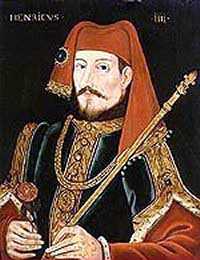
Wednesday, September 30, 2015

Henry IV Becomes King

On September 30, 1399, the seed for the Wars of the Roses was planted. Though the first Lancastrian king came to the throne to high acclaim, it was this action that would eventually lead to the bloody battle between cousins when his grandson, Henry VI, proved inept. Arguing that Lancastrians should never have been kings in the first place, Richard Duke of York brought his own claim forward.

Long before that path of events could have been foreseen, Henry IV had to fight plenty of his own battles to defend his right to reign, even after convincing his cousin, Richard II, to abdicate. Rebellions against the usurper king kept him in an almost constant state of war, despite the fact that he did prove a better ruler than Richard had been.

The first challenge of his reign came quickly from the Welsh led by Owen Glendower in 1400. Allied with the Percys and Mortimers of England, who felt that Edmund Mortimer had a better claim to the throne than Henry. The Welsh were burdened by heavy taxes and revolted against his rule. They also received assistance from Charles VI of France, who was always eager for the opportunity to undermine the English.

The best known battle of rebellion against Henry IV was that led by another Henry. The Earl of Northumberland Henry Percy was known as Hotspur for his fury in battle. Though he had helped put Henry Bolingbroke on the throne, he became disillusioned with his rule and joined the rebellion as a strong and important ally. With the goal of placing Edmund Mortimer Earl of March on the throne in Henry's place, Hotspur's warrior zeal was brought against his king near Shrewsbury on July 21, 1403.

After surprisingly skilled assistance from his son, the future Henry V then a prince of almost 16 years of age, Henry IV proved victorious. Henry Percy was killed in the battle, leaving his troops to be slaughtered in retreat.

The new Earl of Northumberland, another Henry Percy, did not wait long to attempt to right the wrongs that he felt had taken place on that field near Shrewsbury. In 1405, he conspired with Thomas Mowbray Earl of Nottingham to remove Henry IV from power. They, too, were defeated, and Mowbray was executed while Percy went into exile.

Owen Glendower had increased his power in Wales but had not been successful in overthrowing Henry, and his allies were reducing in number with every battle. Henry was able to subdue the Welsh and drive the French from the country with the help of his warrior son. Prince Henry took on increasing duties as a soldier and in government as his father's health began to fail.

As Henry V, this infamous warrior took the war to the French with successes that had not been seen since his ancestor Richard I. If it weren't for the early death of Henry V, we may not have seen civil war erupt among cousins. As the epitome of medieval kingship, there were no whispers of the Lancastrian line being usurpers when Henry V was king. However, his son was only 9 months old when the burden of the crown was thrust upon him, and he never proved capable of carrying it.

The rebellion of Richard Duke of York with the support of Richard Earl of Salisbury was the result of Henry VI's poor rule. Though Richard himself would never wear the crown, two of his sons did, becoming Edward IV and Richard III in turn. The defeat of Richard III by Henry Tudor in 1485 was the final defeat between the Lancastrians and Yorks, leaving a Tudor on the throne and the Plantagenet dynasty at an end.

Wednesday, June 17, 2015

Are English Monarchs Guilty of Legalized Murder?

A few of my recent posts have turned into discussions of executions
performed by various Plantagenet and Tudor monarchs. Often, in a conversation of the end of one dynasty and the beginning of the next, proponents of one king or the other are likely to pull questionable killings out of the debate arsenal. The truth is, whether you think Henry VII was a horrid usurper or saved the country from the evil villain Richard III, most of these men - and women - have some blood on their hands.

Limiting myself to the 15th and 16th centuries, I decided to take a look at executions that may qualify more as murders ordered by the kings and queens of England.

Henry IV

The most infamous execution under Henry IV's reign is that of Richard II. Rumors abound regarding the death of this inept king who was replaced by his royal cousin. While Richard may have starved himself as he suffered from severe depression, there is no doubt that he died under Henry IV's watch on February 14, 1400.

Henry V

Unlike many who would follow him, Henry V does not have a lengthy list of Englishmen who met their end at his hands. One exception is his friend John Oldcastle who was charged with heresy. This Henry is better known for his escapades in France, where he ordered the execution of French prisoners and the starvation of women and children at Rouen.

Henry VI

This gentle and mentally ill monarch may not have ordered questionable executions himself, but England became a bloody killing field during his reign. Many blame his wife, Margaret of Anjou, for sending thousands of soldiers to their deaths rather than let those next in line advise Henry. Others see her as a strong example of a devoted wife and mother. However you judge her, noblemen began to die in droves until the ascendancy of Edward of York.

Edward IV

Edward would eventually follow the example set by his distant cousin, Henry IV, and order the death of Henry VI. Though this did not happen until 1471, after the death of the displaced king's son and heir, Edward undoubtedly saw Henry's death as the beginning of peace after two violent decades of civil war. Officially, Henry died of melancholy.

Some claim that the death of Edward of Lancaster, son of Henry VI, was also murder by Edward or his followers. All that is known for sure is that he fell at Tewkesbury, during or shortly following the battle.

George of Clarence, Edward's own brother, is another mysterious execution that took place at Edward's command. It is also one of the events that got this discussion started here.

Edward was grew bold in his willingness to clear the land of his opponents. Was this in reaction to the death of his father, Richard of York, and brother, Edmund? Richard had hidden behind armies while asking to advise the king. Edward showed no such hesitance. After Hedgeley Moor, he executed the Lancastrian leaders. He was also not afraid to pull his enemies from sanctuary.

Edward V

The doomed Edward V had little opportunity to order any executions. As the 12 year old heir to Edward IV, he was soon replaced by his uncle Richard III. Was Edward a bastard or Richard a usurper? We may never know.

Before Richard was crowned, he ordered the executions of Anthony Woodville and Richard Grey. These deaths technically took place during Edward's reign, if we can even call it that, but he certainly didn't order them. Anthony was a father figure to Edward, but a threat to Richard. There is little question who truly ordered these deaths.

Richard III

Richard's short reign is plagued by questionable deaths, starting with those already mentioned. The hasty execution of William Hastings is also often noted by many as evidence of Richard's ruthlessness. Hastings, a friend and counselor of Edward IV was summarily killed when Richard became convinced that he was plotting against him with Woodville allies.

Richard is also responsible for the execution of Henry Stafford, Duke of Buckingham, after his ill-fated rebellion against his one-time friend. Richard refused even to speak to Buckingham or give him an opportunity to defend himself. Though Richard is also criticized for this, it was standard procedure of the day.

Finally and most dramatically, Richard is held responsible for the murder of his nephews, Edward and Richard, better known as the Princes in the Tower. Though some have attempted to clear Richard's name of this crime, the fact remains that the two boys disappeared while in Richard's care.

Henry VII

Henry VII is often overlooked in favor of the more intriguing kings that bookend his reign. While some believe he deserves more credit and attention, others believe his ruthlessness is what is understated.

Henry showed himself merciful when he made the rebel figurehead, Lambert Simnel, a member of his household rather than having the boy executed. However, Henry would later execute others with eyes for his throne. Perkin Warbeck, Edward of Warwick, and Ralph Wilford each met this end. Henry also sent assassins after Richard de la Pole in Europe in much the way his son would later hunt Reginald Pole.

Henry VIII

It would be possible to write quite a long list of those who fell to the ax under Henry VIII's order. Another Duke of Buckingham met a treasonous end, this one the son of Henry Stafford. Not stopping there, Henry also trumped up charges against several remaining Plantagenets, including Henry Pole, Margaret Pole, Henry Courtenay, Edmund de la Pole, and Henry Howard.

Henry was fast to cross the fine line between love and hate, executing several former friends. Most notable among these are Thomas Moore and Thomas Cromwell. Of course we cannot forget his unfortunate wives, Anne Boleyn and Catherine Howard, in addition to the several men who went to their deaths with them.

Deaths at Henry's order could fill a book, so we will simply agree at this point that he may be the bloodiest, and least predictable of the monarchs considered here.

Edward VI

Edward was young and advised by others throughout his reign, leaving little to accuse him of. Possibly the most shocking execution orders signed by him were for his own uncles, Edward and Thomas Seymour. The Tudors like to keep murder in the family.

Mary

Was "Bloody Mary" truly more ruthless than her predecessors or her sister? Protestants, like Thomas Cranmer, would burn at Mary's order, but the same occurred during her father's reign. She gave into pressure to have Jane Grey executed, but Elizabeth went on to make the remaining Grey sisters sorry to be alive. Mary's reign had its fair share of horrid deaths, but they were less than ordered by her father, and at least she remained consistent regarding who she stood against.

Elizabeth

The glorious virgin queen excelled were her sister did not: public relations. Like her father, she executed noblemen who got out of line, including Thomas Percy, Robert Devereux, Thomas Howard, and, of course, Mary Queen of Scots. Several priests met their end, despite Elizabeth's reputation as
religiously tolerant. Elizabeth was also talented in punishments that did not include death. She played a decades' long marriage game with Robert Dudley (and half the other eligible bachelors in Europe), imprisoned the Grey sisters, their spouses, and children when they dared to start families that may match Elizabeth in royal blood.

Many other pieces of evidence could be brought against each of these monarchs, but in the end it may be true that they are each guilty of legalized murder. This seems inexcusable to us by modern standards, but monarchs of the 15th and 16th centuries had long precedent of using ruthless methods to ensure their power.