Showing posts with label Wars of the Roses. Show all posts

Friday, April 19, 2024

10 Things You May Not Know About the Young Richard III


Dear readers, I hope you understand my difficulty in deciding whether to study 19th century history or be drawn back into medieval times. Perhaps you feel the same way and enjoy historical wanderings? I hope so, because today I have a brilliant guest. If you loved Plantagenet Princess Tudor Queen, you won't want to miss this article from author Wendy Johnson! Also, can we talk about the gorgeous cover art for her new novel, The Traitor's Son?! Read on to learn a few new things about the man people are still arguing about 500 years after his death, King Richard III.

Welcome, Wendy!

~ Samantha

~~~~~~~~~~~~~~~~~~~~~~~~~

10 Things You May Not Know About the Young Richard III

Guest Post by Wendy Johnson

  1. Born in 1452, Richard was the eighth son and eleventh child(!) born to his parents, Richard Duke of York and Cecily Neville, but only the fourth son to survive infancy. His eldest sibling, Anne, later Duchess of Exeter, was born in 1439 and the youngest, Ursula, born three years after Richard, sadly died aged three in 1458.


  2. Richard was born in the same year as Leonardo da Vinci. Other famous people born around the same time include explorers, John Cabot and Christopher Columbus, and the artists, Hieronymous Bosch and Filippino Lippi.

  3. The name Richard occurs many times within the family of York. The young Richard of Gloucester could boast four Richards amongst his close relatives – his father, Richard, duke of York; his grandfather, Richard, earl of Cambridge; his uncle, Richard, earl of Salisbury, and his illustrious cousin, Richard, earl of Warwick. He later went on to become the uncle of two further Richards: his nephew, Richard, duke of York (son of his brother Edward IV) and Richard of Clarence (the infant son of his brother, George).

  4. In the Middle Ages, the youngest sons of the nobility were often inducted into the Church. As Richard is known to have been fluent in Latin, some have speculated that his parents initially intended an ecclesiastical career for him. Following his father’s death at the Battle of Wakefield (1460) and his brother’s accession to the crown as Edward IV (1461), it may have been felt that, family dynamics having changed, Richard’s life should remain a secular one and for the boy to undergo military training with a view to supporting his king in the years ahead.

    Representation of Richard's Garter Plaque from
    'The College of King Richard III at Middleham' by Joyce Melhuish.
    Drawing by Isolde Wigram.
     

  5. Richard was awarded the Order of the Bath in 1461, shortly before his brother’s coronation, and invested as a Knight of the Garter in 1466. His Garter plaque can still be seen above his allotted stall on the south side of St. George’s Chapel Windsor.

  6. Richard spent much of his early childhood in the company of his elder brother, George, and their sister, Margaret. Once Edward IV assumed the throne, he awarded his young siblings the Palace of Placentia (later known as Greenwich) as their principal residence. In which case it is reasonable to assume that Richard developed a closer bond with George and Margaret than he did with Edward, who was over ten years his senior.

  7. Richard appears to have been in the habit of signing his books. His signature can be found within an anthology of Romances and Old Testament stories, which exists in a collection at Longleat House. This anthology contains an assortment of writings: Lydgate’s Siege of Thebes; two stories from Chaucer’s Canterbury Tales; the popular medieval romance Ipomedon; and stories from the Old Testament. Experts have speculated, from the dialects and spelling used in its creation, that the Chaucerian and Lydgate sections were written in the north of England, Ipomedon in the Midlands, and the Old Testament section in the south. It has been further concluded that, although the components of the anthology may have been created separately and then stitched together, it is possible they were commissioned as a whole, and collated in northern England, or the Midlands. (A. F. Sutton and L. Viser-Fuchs, ‘Richard III’s Books II’ The Ricardian Vol. Vll, Nos. 95 and 97 (1986/87) pp. 327-332, 371-378) As the estates of Richard’s tutor, Richard Neville, earl of Warwick, lay in both these areas, it is entirely possible that the item was fashioned specifically for the young Richard as a gift from the earl. Richard’s florid signature ‘R. Gloucestre’ and the motto ‘tant le desieree’ (‘I have longed for it so much’) in the chivalric romance Ipomedon is certainly suggestive of an idealistic teenager, keen to enjoy tales of the perfect knight and to proudly inscribe his ownership upon its pages.

    Domtoren, Utrecht.
    The Bishop's Palace was a refuge for Richard in 1461


  8. Richard spent two periods of his early life as a refugee. At the age of eight, following his father’s defeat at the Battle of Wakefield, he was sent for safety to the Low Countries (modern-day Netherlands), in the company of his elder brother, George. Both boys remained in exile for two months until their brother, Edward, won the crown at the Battle of Towton in March 1461. Less than ten years later, Richard and the king were forced to flee English shores when their cousin, the Earl of Warwick rebelled. Once again, Richard found himself in the Low Countries, this time housed at The Hague and later in Bruges, before returning to England prior to the Battle of Barnet.

  9. The Battle of Barnet, fought on 14th April 1471, was Richard’s first full scale military encounter. Surprisingly, for a novice in the arts of war, he was commissioned by King Edward to lead the vanguard – the foremost division of any medieval armed force, entrusted with the task of leading the army into battle.

  10. Richard lost at least two of his close attendants and friends at the Battle of Barnet, on Easter Day 1471. In July 1477, he drew up an indenture at Queen’s College, Cambridge where, in exchange for an endowment for four fellowships, the recipients would pray for, amongst others, the souls of ‘Thomas Par (sic) and John Milewater…which were slain in his service’. The fact that Parr and Milewater were interred together in the Chapel of St. Francis, at the Church of the Greyfriars, London, may possibly suggest they were buried - and their obsequies overseen - by their master Richard of Gloucester. The wording on their ledger stone, describing them as ‘valiant squires of the lord Richard, duke of Gloucester’ and the fact that they ‘died on sacred Easter Day at Barnet’ further suggests a kind intervention by their benevolent master.

Read more about the young Richard III in The Traitor's Son, which Philippa Langley described as "Exquisitely written. An evocative and thoughtful retelling of the early life of Richard III."

Caught between a king and a kingmaker, young Richard Plantagenet knows he’ll have to choose...

1461: Richard Duke of York, King by Right, has been branded a traitor and slain by his Lancastrian foes. For his eight-year-old son—Richard Plantagenet—England has become a dangerous place.

As the boy grapples with grief and uncertainty, his elder brother, Edward, defeats the enemy and claims the throne. Dazzled by his glorious sibling, young Richard soon discovers that imperfections lurk beneath his brother's majestic façade. Enter Richard Neville, Earl of Warwick—cousin, tutor, luminary—whose life has given him everything but that which he truly craves: a son. A filial bond forms between man and boy as they fill the void in each other’s lives. Yet, when treachery tears their world asunder, Richard faces an agonizing dilemma: pledge allegiance to Edward—his blood brother and king—or to Warwick, the father figure who has shaped his life and affections.

Painfully trapped between duty and devotion, Richard faces a grim reality: whatever he decides will mean a fight to the death.

In The Traitor’s Son, Wendy Johnson masterfully weaves a tapestry of loyalty, love, and sacrifice against the backdrop of England's turbulent history. Through the eyes of a young Richard III, readers are transported into a world where every choice is fraught with peril, and the bonds of kinship are tested to their limits. As Richard Plantagenet navigates the explosive tensions within his own family, readers are swept along on a journey of intrigue and passion that will leave them spellbound until the final page.


Wendy has a lifelong passion for medieval history, its people, and for bringing their incredible stories to life. Her specific areas of interest are the fifteenth century, the Wars of the Roses, and Richard III in particular. She enjoys narratives which immerse the reader in the past, and tries faithfully to recreate the later Middle Ages within in her own writing. She has contributed to a number of historical anthologies and was a runner up in the Woman and Home Short Story Competition 2008.

A member of the Richard III Society since 1986, Wendy is also a founder member of Philippa Langley’s Looking for Richard Project, which located the king’s lost grave in 2012. She co-authored Finding Richard III: the Official Account of Research by the Retrieval and Reburial Project in 2014, and in 2019 received the Richard III Society’s Robert Hamblin Award.

THE TRAITOR’S SON, volume one in a Richard III trilogy, is Wendy’s debut novel and she is currently working on the sequel.


Tuesday, March 12, 2024

Women of the Wars of the Roses


I know my readers will be thrilled with today's Women's History Month guest! Judith Arnopp joins us with a fantastic post about women of the Wars of the Roses, including Elizabeth of York, who is near and dear to my heart. Judith has written prolifically about this era, so check out her published works!

~ Samantha

~~~~~~~~~~~~~~~~~~~~~~~~~

Women of the Wars of the Roses

Guest Post by Judith Arnopp

For the last four years I have been writing a trilogy from the perspective of Henry VIII, but my first love is giving a voice to medieval and Tudor women. I have written fifteen novels that trace events through the eyes of women and give voice to those who have been unheard for centuries. When you consider that females make up half the population, their experiences should be allowed to impact on the traditional record. In the past, they have been written off as inconsequential, but I’d dare you to tell that to Margaret Beaufort.

Margaret stands shoulder to shoulder with the most influential men of her time. Like her or not, her actions impacted on the world and they still do. Had Margaret not fought to restore her son, Henry VII’s rights and enabled him to take the crown of England, we’d have had no Henry VIII, no restoration, no Church of England. Hurrah, I hear some of you cry but whatever your religious persuasion, nobody can claim that Margaret made no difference.

I studied Margaret in depth for years while I wrote The Beaufort Chronicle, a trilogy tracing her life from the nursery to the grave, and I found nothing to account for the negative manner in which she is viewed today. She was pious, determined, charitable, kind and deeply mourned on her passing. Today however, largely due to negative portrayals on television and fiction, she is despised by many. In these enlightened days female strength is usually applauded, but in Margaret’s case, it seems not. 


Margaret is often blamed for the disappearance of the princes from the Tower, but there is nothing in the record to prove it; there are plenty of other candidates who could be held equally as culpable. Unauthorised entry to the Tower was just not possible; whatever the fate of the boys, it must have been carried out with either the knowledge of the king or the Constable of the Tower. 

When the war of the roses began, Margaret was a small insignificant child, yet she emerged as the ultimate victor – it never ceases to amaze me that this fact is uncelebrated. Perhaps it isn’t due to her gender at all, perhaps it is an age thing. Her portrait shows an old nun-like figure; she is praying, her hands clasped, her expression pious – she does not provide material for a romantic heroine and so she is defamed instead. We should not overlook the fact that as the victor in the conflict, Margaret had some control over contemporary public opinion, but even the records from overseas reveal nothing of detriment.

There are parallels between Margaret Beaufort and the historical figure I am currently working on, Marguerite of Anjou. The contemporary record holds plenty of negative criticism of her. Like Margaret Beaufort, she too fought for the rights of her son, but Marguerite emerged a failure from the struggles. When York assumed control of King Henry VI and ultimately took the throne, Marguerite, a dispossessed queen, did not retire genteelly from the battle – instead she fought tooth and nail for the sake of her son – like a ‘she-wolf’ according to Shakespeare. But I have to ask myself if I would not do the same for my sons. 

Her surviving letters are evidence that she did indeed fulfil her duties as queen, supporting her household, responding to requests for help, managing her estates, arranging diplomatic marriages and supporting religious houses. In 1448 she was active in founding Queens’ College, Cambridge. Yet even from the early days she was criticised for failing to provide an heir (no mention that the fault might not lie with her) yet once she gave birth to a strong son, York spread propaganda that the king was not the father.

Attrocities have been laid at Marguerite’s door, atrocities that were not ordered or carried out by Marguerite personally but committed by the men under her control. Since she was not even present, the most she can be accused of is losing control of her army. We hear much about the beheading and subsequent mock crowning of Richard of York and his son Edmund before their heads were raised on the city of York’s Micklegate bar, or Lancaster’s pillaging and looting of towns, yet the many offences York committed are often overlooked. 

The war of the roses was a military mess, with crimes and carnage on both sides and it is impossible to choose which side was justified. We still tend to view the war as a man’s game, but women were involved. Marguerite of Anjou, Cecily Neville, Anne Beauchamp, Jacquetta of Luxembourg, Elizabeth Woodville, Margaret Beauchamp, Margaret Beaufort, Anne and Isabel Neville, Elizabeth of York; they didn’t sit at home knitting while their husbands fought a bloody war. They may not have wielded a sword, but they were there, intriguing, negotiating, brokering peace deals, protecting their sons, guarding their property and in some cases leading armies. I never take sides in the war of the roses, but I enjoy the spectacle and I have learned that if the men fighting these battles were lions, then the women were tigers.


Connect with Judith

Award winning historical fiction author, Judith Arnopp, holds a Batchelor’s degree in English/Creative writing and a Masters in Medieval Studies. She lives on the coast of West Wales where she writes both fiction and non-fiction. She is best known for her novels set in the Medieval and Tudor period, focussing on the perspective of historical women and more recently from the perspective of Henry VIII himself.

Judith is also a founder member of a re-enactment group called The Fyne Companye of Cambria which is when she began to experiment with sewing historical garments. She now makes clothes and accessories both for the group and others. She is not a professionally trained sewer but through trial, error and determination has learned how to make authentic looking, if not strictly historically accurate clothing. Her non-fiction book about Tudor clothing How to Dress Like a Tudor was published by Pen and Sword in 2023.

Connect with Judith on her website or blog, and find her books here!

~~~~~~~~~~~~~~~~~~~~~~~~~

Join me on your preferred social media to make sure you don't miss a thing!

Facebook

Instagram

Twitter

Tuesday, May 11, 2021

A Solemn Christmas for Cecily Neville in 1461


My guest today is well-known for her compassionate portrayals of medieval women. In her latest novel, The Queen's Rival, Anne O'Brien explores the eventful life of Cecily Neville, mother of Edward IV and Richard III. Christmas of 1461 would have been one of both celebration and mourning for Cecily, as Anne explains below. 

Welcome, Anne!

~ Samantha

~~~~~~~~~~~~~~~~~~~~~~~~~

A Solemn Christmas for Cecily Neville in 1461

Guest Post by Anne O'Brien

Cecily Neville, Dowager Duchess of York, King's Mother, made the decision in December 1461 not to celebrate Christmas and the New Year at Greenwich with her son Edward, the newly crowned King Edward IV of England. Instead she celebrated at the palace of Eltham. It was one year since she was widowed.

Christine de Pisan advised that 'a wise princess who is widowed' should stay in seclusion for a time, with only a little daylight, and dressed sombrely 'according to decent custom'. Always politically aware, this was not possible for Cecily, however much she might have wished a time of quiet mourning after the tragic death of Richard, Duke of York. Whereas once she might have seen herself as 'Queen in Waiting', her new role was that of supporting the rule of her son through intercession and good advice as King's Mother. Cecily knew that it would be important for her to see and be seen at this festive time of year when her son's reign was still so new. To shut herself away would not be the choice of 'a wise princess'.

We know that Cecily must have marked the occasion at Eltham with the usual high degree of medieval feasting and merriment since it was placed on record by the London Chronicler of the day. Although no details remain, it is presumed that a feast was held, all seemly and dignified. Strict protocol was laid down in the Ryalle Book about the seating and serving of guests appropriate to Cecily's household on special occasions. Cecily would not share dishes with anyone except her younger sons. Any bishop present would be seated at the upper end of Cecily's table whereas the nobility took the seats at the lower end. Cecily's daughter Margaret - later to become Duchess of Burgundy - would be seated above all the Duchesses of England, in spite of her lack of title at this time.

We presume that as well as the feasting, the usual games and festivities, with music and dancing, were held to mark the birth of the Christ Child.

But midway through this festive time, Cecily pursued a distinct change in atmosphere. The 30th day of December was the first anniversary of the death of Richard, Duke of York, at the Battle of Wakefield where he and their son Rutland were both decapitated, their heads placed with that of Salisbury, Cecily's brother, on Micklegate Bar in York. A paper crown adorned York's brow in a final act of malicious humiliation.

To mark this sombre occasion Cecily held the 'year's mind', the solemn Requiem Mass on the anniversary of her husband's death. Such a service would by custom be held in the church where the body of Richard was buried, but on this occasion, this was not so. Richard's body, recovered from the battlefield, had been hurriedly buried in the Priory of St John the Evangelist at Pontefract, where it still lay with the earthly remains of Rutland and Salisbury.

Instead, Cecily held the 'year's mind' in great splendour in Old St Paul's Cathedral. A hearse covered with a pall was set up before the High Altar with banks of candles burning around it. The funeral rites were then repeated as if in the corpse's presence. Thus it was as if the dead were re-called, being brought before the living once more, for prayer and and a final re-commital to the grave.

It must have been a magnificent memorial, although the names of those who attended were not recorded. We know that Cecily spent one hundred and fifty pounds on the candles to illuminate the pall-covered hearse, a vast sum in 1461 and indicative of the impression she wished to make.

What a bitter experience this was for the Dowager Duchess as she looked back over her year of mourning, in spite of the victory and coronation for her son Edward. Did she find some consolation in the severe words of the Requiem, in the sacred ceremony with its weight of death and judgement and all its candles. A heart-wrenching occasion before she returned to Eltham to the festivity of New Year's Gift Giving.

What we do know is that the Duchess was not satisfied with the burial of the Duke of York and her son in Pontefract. It was her intention to bring their bodies home to Fotheringhay, to be buried there in the most important of Yorkist bases. This was not achieved until sixteen years later.

~~~~~~~~~~~~~~~~~~~~~~~~~

The Queen's Rival


England, 1459.

One family united by blood. Torn apart by war…

The Wars of the Roses storm through the country, and Cecily Neville, Duchess of York, plots to topple the weak-minded King Henry VI from the throne.

But when the Yorkists are defeated at the battle of Ludford Bridge, Cecily’s family flee and abandon her to face a marauding Lancastrian army on her own.

Stripped of her lands and imprisoned in Tonbridge Castle, the Duchess begins to spin a web of deceit. One that will eventually lead to treason, to the fall of King Henry VI, and to her eldest son being crowned King Edward IV.


AVAILABLE NOW ON AMAZON US, AMAZON UK, AMAZON CA, AMAZON AU, BARNES & NOBLE, WATERSTONES, KOBO, BLACKWELLS, WHSMITH, AND AUDIBLE


Connect with Anne

Sunday Times Bestselling author Anne O’Brien was born in West Yorkshire. After gaining a BA Honours degree in History at Manchester University and a Master’s in Education at Hull, she lived in East Yorkshire for many years as a teacher of history. Today she has sold over 700,000 copies of her books medieval history novels in the UK and internationally. She lives with her husband in an eighteenth-century timber-framed cottage in the depths of the Welsh Marches in Herefordshire. The area provides endless inspiration for her novels which breathe life into the forgotten women of medieval history.

Connect with Anne on her website or Amazon Author Page or through social media on Twitter, Facebook, LinkedIn, Pinterest, or Goodreads.


Monday, October 23, 2017

Henry Tudor's Claim to England's Throne

Portrait of young Henry Tudor
by Musee Calvet
It is often said that Henry Tudor did not have a strong claim to the throne when he took it in 1485. However, he was quick to publicize his three-prong claim in the hopes that people not convinced by one reason would willingly accept another. With many of the branches of the Plantagenet family tree rather thoroughly pruned during the decades of the Wars of the Roses, it is somewhat surprising just how good Henry's claim was.

Tudor's strongest claim was through conquest. Regardless of the semi-royal bloodline that we will discuss next, Henry Tudor marched into England and killed its king. Richard III had left behind his heir, John de la Pole, and a few other nephews and the like, but it doesn't really matter because he was defeated on the field. While we sometimes minimize this claim, people of the time did not. John de la Pole did not fight Tudor (at least not at first), but served him, as did most noble sons of the era who could match their king's pedigree with family trees reaching back to Edward III.

Yet, Henry could also trace his ancestry back to the legendary king, and this was the second prong of his claim. Henry's mother, Margaret, was the heiress of the Beaufort line descended from John of Gaunt, which was legitimized in 1399. The Beauforts had suffered heavy losses during the Wars of the Roses in support of the Lancastrian king, Henry VI. Debate over which Plantagenet branch held a superior claim to the throne had begun as soon as Henry Bolingbroke took the crown from his cousin, Richard II. Unknowingly, Henry IV set the precedent that the crown could be taken by whichever family member was most able, rather than the one who inherited it, and his descendants suffered for it. Confusion over whether a female line should be considered and reluctance to crown children with greater claims than capable adults added fuel to the debate long before Tudor made his claim, causing bloodline alone to be a shaky foundation.

Henry VI
In addition to his mother being the great granddaughter of John of Gaunt, Henry's father was half-brother to the king, Henry VI. Edmund Tudor's blood was decidedly not royal, but his father had married Catherine Valois after the death of her first husband, Henry V. While Catherine could not pass on any right to inherit England's crown to the children of her second marriage, it could not hurt that Henry could call the Lancastrian king his uncle.

Henry Tudor understood that others could match his pedigree, so he planned to take a wife whose status was unquestioned and whose popularity was well-known. When he married Elizabeth of York, Tudor had already established that he took his position in his own right. However, uniting England under the joint heirs of Lancaster and York was a brilliant political move. Those who did not believe in Tudor's claim were likely to support him for the sake of his wife. The union went far toward securing peace and acquiescence to Tudor rule. By timing the wedding when he did (after his own coronation), Tudor ensured that Elizabeth strengthened his claim rather than making it her own.

The fact of the matter is that anyone who might have made a grasp for the throne of England by 1485 had just as questionable of a claim as Henry Tudor. That is precisely how the Wars of the Roses began in the first place with York proposing that their line was superior to that of the sitting Lancastrian king. With so many noble sons dying on the field and disagreements on just which Plantagenet heirs had superior claims for almost a century before Tudor's victory, a claim of bloodline alone was simply not sufficient to bring about peace.

Monday, January 11, 2016

Margaret Myths: Guest Post by Catherine Hokin


Join me in welcoming Catherine Hokin to my blog today! I am happy to be a part of the blog tour to announce the release of Catherine's novel, Blood and Roses, in which she challenges some of the best known myths surrounding Margaret of Anjou. If the name alone conjures up images of a villain, read on.  ~ Samantha


The Margaret Myths

“Foreigner, white devil, shrew, virago, vengeful fury.”


I am indebted to Dorothea Kehler (Shakespeare’s Widows) for that brilliant summation of the way Shakespeare portrays Margaret of Anjou (1430-1482), the protagonist of my novel Blood and Roses. Our beloved bard is rather obsessed with her – Margaret appears in all three parts of Henry IV and, with a complete disregard for historical fact, in Richard III where Shakespeare pulls no punches, describing her as “a foul wrinkled witch’ and a ‘hateful with’red hag.”

Shakespeare’s Margaret is evil and twisted almost to the point of parody: wandering round Court clutching the severed head of her supposed lover the Duke of Suffolk; rubbing a cloth soaked in his son’s blood all over the Duke of York’s face before placing a paper crown on his head and stabbing him; prophesying evil falling on the House of York like a medieval Cassandra. As a character portrayal it is over-wrought at best; as an historical source it is deeply suspect, as we would expect given that the plays were written for Elizabeth I as pieces of political propaganda. But the myths about the evil ‘she-wolf’ persist and Shakespeare’s portrayal is the one many people recognise, which is where I came in…

The challenge for a historical novelist is to get underneath the sources, separate the fact from the fiction (often just as important) and find the stories hidden in the gaps – imagine miners scrabbling in the dark for that nugget which turns those never-ending ‘but why?’ moments into narrative gold.

I like challenging women who won’t conform to the customs and pre-conceptions of their time, Margaret always struck me as the epitome of this which is why I chose her as the protagonist of my first novel.

There is, of course, the real Margaret and my Margaret. The real Margaret was described by a contemporary as a “great and strong-laboured woman” – that fits the bill rather nicely. She was a Queen Consort – her role was essentially to be an intercessor and a peacemaker which is all very well except she was married to the weak, ill and ineffectual King Henry VI at a time when the English Crown was very much the spoils of war. Margaret’s crime? She was politically astute, well-educated (by very strong women role models) and perfectly able to rule in an England that would not countenance her doing so. Her punishment? To be made the scapegoat for her husband’s failings, a not uncommon process of female vilification in the medieval period as Diana E.S. Dunn discusses in War and Society in Medieval Britain.

So who is my Margaret? I hope you will find everything the real one was and more: a strong, deeply intelligent women driven by ambition and perfectly capable of manipulating circumstances to her own advantage – believe me, Jacquetta Woodville in my novel deeply regrets ever pretending to play at witchcraft.

What is she not? A crone, a murderess or a woman so foolish that she would take a cast of lovers including the Duke of Suffolk who was 34 years older than her, only a man could have written that…

Blood and Roses – it’s not a romance, there’s far too much blood for that but I hope it is a portrayal of a woman you will be as fascinated by as me. Perhaps I need to let you hear from the lady herself in a short extract…

I am alone.

She sat in a Court bustling with people and knew the truth of it.

I am alone.

If anyone of them knew what I plan to do, what I will make Jacquetta and Rivers party to, they would drive me from this throne and there would be no one to defend me.

I am alone but I am winning.

The thought brought a smile to her lips and everyone watching her wondered what brought such a sparkle to her eyes and a softening to her face the Court rarely saw these days.

I am winning because they hate me less than they despise York for his ambitions and pretensions.

Her smile deepened as she remembered the reluctance with which York had been forced to swear his allegiance to Henry just days before when the support he presumed would follow his second attack on Somerset had simply melted away. It was a smile so full of warmth, the courtiers began to look around them for the object of her delight. 

She was no fool; she could sense the power in the country shifting. There were risings from Derbyshire to Devon, local grievances in the main but with the potential to become far more dangerous. It was already becoming treacherously unstable in the North where the Nevilles and the Percies had rekindled past hatreds and looked set to plunge the whole region into chaos. And she knew well enough how close York was  to his nephew Richard Neville, Earl of Warwick, knew that he would watch the North like a hawk ready to swoop and make any rebellion his. 

But, for now, she was winning and York was gone from Court and, if the real danger was not in the plan but in the execution, she was ready to face that.  So she smiled and her women whispered and she hugged her secret close.

About Blood and Roses

Blood and Roses – a novel of Margaret of Anjou and her pivotal role in the Wars of the Roses by Catherine Hokin.
1460
The English Crown – a bloodied, restless prize.
The one contender strong enough to hold it? A woman. Margaret of Anjou: a French Queen in a hostile country, born to rule but refused the right, shackled to a King lost in a shadow-land.
When a craving for power becomes a crusade, when two rival dynasties rip the country apart in their desire to rule it and thrones are the spoils of a battlefield, the stakes can only rise. And if the highest stake you have is your son?
You play it.

Blood and Roses, a work of historical fiction, retells the story of Margaret of Anjou (1430-82), wife of Henry VI and a key protagonist in the Wars of the Roses. This is a feminist revision of a woman frequently imagined only as the shadowy figure demonised by Shakespeare. Blood and Roses examines Margaret as a Queen unable to wield the power and authority she is capable of, as a wife trapped in marriage to a man born to be a saint and as a mother whose son meets a terrible fate she has set in motion.

The story opens in 1480 with Margaret as an unwilling exile in France and is structured as a reflection on the events of her life and the relationships that shaped it, primarily her son Edward, her husband Henry IV, Anne Neville and the Earl of Warwick.

The novel spans 1435 to 1480. The dynastic conflicts around the throne, known to a modern audience as the Wars of the Roses, are the main backdrop to the story including the battles which were some of the bloodiest ever fought.

​The main conflicts in the novel reflect both the issues of the age – the challenge of holding onto a crown in a kingdom riven by dynastic struggle in which loyalties shift like quicksand – and the personal price to be paid by being a woman outside her time. In trying to resolve her marriage and its desperate need for an heir, shape her son for a dangerous future and reconcile her ambition with her lack of power, does Margaret become the author of her own fate?

A key issue for historians has been the relationship between Margaret of Anjou and her husband Henry IV (who suffered from what has been described as narcolepsy, resulting in long periods of what are best described as coma) and the paternity of her son, born 8 years into what was a seemingly barren marriage. Blood and Roses offers a solution to the paternity question rooted in Margaret’s political acumen and her relationship with Jacquetta Woodville – a friendship which ended in a betrayal that has never been fully explored.

This is a novel about power: winning it, the sacrifices made for it and its value. It is also a novel about a woman out of her time, playing a game ultimately no one can control.
from Yolk Publishing.


About the Author


Catherine is a Glasgow-based author with a degree in History from Manchester University. After years of talking about it, she finally started writing seriously about 3 years ago, researching and writing her debut novel, Blood and Roses, which will be published in January 2016 by Yolk Publishing. The novel tells the story of Margaret of Anjou and her pivotal role in the Wars of the Roses, exploring the relationship between Margaret and her son and her part in shaping the course of the bloody political rivalry of the fifteenth century. About a year ago, Catherine also started writing short stories - she was recently 3rd prize winner in the 2015 West Sussex Writers Short Story Competition and a finalist in the Scottish Arts Club 2015 Short Story Competition. She regularly blogs as Heroine Chic, casting a historical, and often hysterical, eye over women in history, popular culture and life in general.


Connect with Catherine Hokin

Connect with Catherine Hokin through her website, blog, Facebook, or Twitter.

Get Blood and Roses at Amazon.co.uk or Amazon US!

Thursday, October 8, 2015

How Did Henry Tudor Become King?

Love him or hate him, one has to admit that Henry Tudor defied all odds when he claimed the kingdom of England as his own. When the crown was laid on his head on August 22, 1485, it likely surprised him as much as the rest of the country. Richard III, the last Plantagenet king, certainly had not expected to be defeated by the "Welsh milksop." How did it happen? What chain of events fell into place to turn a minor half Welsh nobleman into a king?

Henry's ascendancy cannot be credited to his bloodline. Though history enthusiasts argue to this day regarding the strength of his claim, Henry himself made little attempt to justify his grasp at power that way. He claimed his rich Welsh heritage through his grandfather, Owen Tudor. His mother, Margaret Beaufort, did have a bloodline that eventually reached back to Edward III through John of Gaunt's mistress, but this was hardly a fact that would place him near the throne.

Except that it did.

Henry may not have had much royal blood, but with noble cousins killing each other on battlefields for the last 30 years of the Wars of the Roses, few stronger options existed. Yes, there were other relations, but each remaining family line had some weakness in it before it reached back to a solid royal root. In the end, the fitness of his blood didn't matter, because Henry Tudor won the crown through conquest, just as his distant relative William of Normandy had.

Why was England in this state where distant royal bastard lines were considered for kingship? It all started with the many sons of Edward III. 

Edward III's heir gave all signs of being a medieval knight quite capable of following in his father's footsteps. Probably for his dark armor, or possibly because of acts committed in France, this younger Edward became known as the Black Prince. Unfortunately, the he died shortly before his father, leaving a young Richard II on the throne surrounded by uncles and cousins who coveted power.

Richard II was forced to abdicate by his cousin, Henry Bolingbroke, who was the son of John of Gaunt - another of Edward III's sons. When he became king in 1399, Henry IV set the stage for the Wars of the Roses that would clear the way for the Tudor dynasty. Considered the Lancastrian branch of the Plantagenet royal family due to John of Gaunt's title as Duke of Lancaster, Henry's reign almost immediately came under fire from the Mortimer family, which had ties to Edward III's second son, George, and fourth son, Edmund. Henry proved capable of quelling those rebellions, and the country rallied behind his son when he became Henry V.

Henry V was considered everything that a medieval king should be. He pressed to reclaim lands in France that had previously been in English hands under Henry II, the original Plantagenet king. No one felt a need to point out that his father had been a usurper. Things might have gone on swimmingly had Henry V not died too young, leaving a 9 month old Henry VI as king.

Henry VI was raised and advised by his uncles, and never seemed capable of shaking his need for their instruction - or at least someone's instruction. His mother was Catherine of Valois, daughter of Charles VI of France who was quite insane when he died. Both Catherine and Henry would eventually demonstrate signs that they suffered the same malady.

The young widow Catherine made a scandalous second marriage to a servant of her household. His name was Owen Tudor. This connection gives Henry Tudor one link to the royal family, but not his strongest one. It did, however, give him his Tudor name that would go down in history.

Henry VI proved completely incapable of ruling, becoming victim to those who would manipulate and mislead him before falling into long trances of madness. Soon the Duke of York was pressing his claim as heir presumptive, and calling Henry unfit for duty. Were it not for the strength, or some would say stubbornness of Henry's queen Margaret of Anjou, that may have been an end of things. Richard of York may have been king as agreed by Henry when he made him his heir, disinheriting his own young son.

Margaret took the fight to the York supporters, and many noblemen answered her call in defense of their anointed king. Over the course of three decades, generations of earls and dukes, many of whom could trace their family tree back to reach Edward III, were left dead on fields of battle. By the time Henry Tudor defeated Richard III at Bosworth, there truly were few left who had a better blood claim, and none had struck down the last king in battle.

Before we reach that moment though, we must give attention to England's York kings. Richard Duke of York who had originally taken up the fight was killed in the battle of Wakefield in 1460. Instead of giving them victory, the Lancastrians now were faced with a vengeful Edward Earl of March, now Duke of York. The 17 year old heir of York was the epitome of a soldier, standing tall and golden above the men around him and looking every bit the Plantagenet king that Henry VI was not.

When he became king in 1461, he continued to battle the supporters of Henry VI for over a decade. The fighting did not come to an end until 1471, when the Lancastrian prince was killed in battle and Henry VI was disposed of in the Tower. With nobody to threaten him, Edward IV could have enjoyed a long and peaceful reign. Like his predecessor, Henry V, Edward made the mistake of dying too young and leaving the future vague and turbulent.

His heir was 12 year old Edward, who was immediately proclaimed Edward V with his uncle Richard of Gloucester as protector. Without debating whether Richard was the one who murdered Edward and his brother, we will simply say that it was Richard who was crowned while the young sons of Edward IV disappeared. Their fate as the Princes in the Tower is one of history's greatest mysteries, and was another key slipping into place opening the way for Henry Tudor.

Whether Richard III had done away with the boys or not, enough people questioned his innocence and his motivation in taking his nephew's crown. He faced rebellion from the Duke of Buckingham, who also had a fair share of royal blood, and the constant threat of the followers of Henry Tudor from exile. When Henry landed in Wales, Richard likely saw it as a chance to rid himself of an annoyance. Since Richard's wife and son had both recently died, he had nobody to follow him if he died in battle besides the sons of his sisters and young Edward of Warwick, son of Richard's brother George.

One of those men did challenge Henry VII after he was made the first Tudor king. John de la Pole led forces at Stoke in 1487, supposedly in favor of the imprisoned Edward of Warwick though it is just as likely that de la Pole was fighting for his own rights as Richard III's heir. He was killed, and Henry Tudor cemented his place in history as the father of the Tudor dynasty, a phenomenon that none of his forefathers could have predicted.

Henry also took the step of strengthening his claim through the blood of his wife. He married Elizabeth or York, the oldest child of Edward IV. She was a peaceful and uniting presence, bearing Henry sons to carry on the Tudor name. After more than three centuries, the Plantagenet dynasty was no more, and the Tudors would go on to become one of the most famous dynasties that ever reigned in England.

Wednesday, September 30, 2015

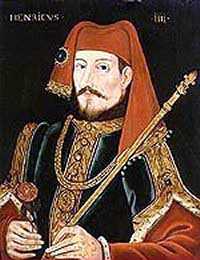
Henry IV Becomes King

On September 30, 1399, the seed for the Wars of the Roses was planted. Though the first Lancastrian king came to the throne to high acclaim, it was this action that would eventually lead to the bloody battle between cousins when his grandson, Henry VI, proved inept. Arguing that Lancastrians should never have been kings in the first place, Richard Duke of York brought his own claim forward.

Long before that path of events could have been foreseen, Henry IV had to fight plenty of his own battles to defend his right to reign, even after convincing his cousin, Richard II, to abdicate. Rebellions against the usurper king kept him in an almost constant state of war, despite the fact that he did prove a better ruler than Richard had been.

The first challenge of his reign came quickly from the Welsh led by Owen Glendower in 1400. Allied with the Percys and Mortimers of England, who felt that Edmund Mortimer had a better claim to the throne than Henry. The Welsh were burdened by heavy taxes and revolted against his rule. They also received assistance from Charles VI of France, who was always eager for the opportunity to undermine the English.

The best known battle of rebellion against Henry IV was that led by another Henry. The Earl of Northumberland Henry Percy was known as Hotspur for his fury in battle. Though he had helped put Henry Bolingbroke on the throne, he became disillusioned with his rule and joined the rebellion as a strong and important ally. With the goal of placing Edmund Mortimer Earl of March on the throne in Henry's place, Hotspur's warrior zeal was brought against his king near Shrewsbury on July 21, 1403.

After surprisingly skilled assistance from his son, the future Henry V then a prince of almost 16 years of age, Henry IV proved victorious. Henry Percy was killed in the battle, leaving his troops to be slaughtered in retreat.

The new Earl of Northumberland, another Henry Percy, did not wait long to attempt to right the wrongs that he felt had taken place on that field near Shrewsbury. In 1405, he conspired with Thomas Mowbray Earl of Nottingham to remove Henry IV from power. They, too, were defeated, and Mowbray was executed while Percy went into exile.

Owen Glendower had increased his power in Wales but had not been successful in overthrowing Henry, and his allies were reducing in number with every battle. Henry was able to subdue the Welsh and drive the French from the country with the help of his warrior son. Prince Henry took on increasing duties as a soldier and in government as his father's health began to fail.

As Henry V, this infamous warrior took the war to the French with successes that had not been seen since his ancestor Richard I. If it weren't for the early death of Henry V, we may not have seen civil war erupt among cousins. As the epitome of medieval kingship, there were no whispers of the Lancastrian line being usurpers when Henry V was king. However, his son was only 9 months old when the burden of the crown was thrust upon him, and he never proved capable of carrying it.

The rebellion of Richard Duke of York with the support of Richard Earl of Salisbury was the result of Henry VI's poor rule. Though Richard himself would never wear the crown, two of his sons did, becoming Edward IV and Richard III in turn. The defeat of Richard III by Henry Tudor in 1485 was the final defeat between the Lancastrians and Yorks, leaving a Tudor on the throne and the Plantagenet dynasty at an end.

Tuesday, July 14, 2015

Who Remained after the Battle of Stoke?


The Battle of Stoke is widely considered the end of the Wars of the Roses. Most who had battled for supremacy in England had died by the time this battle took place on June 16, 1487, and one that had the most potential for the future, John de la Pole, fell on the field at Stoke. Henry Tudor cemented his place on England's throne on this day by proving that Bosworth was no fluke. He was prepared to defend his right to call himself King of England.

John de la Pole, an organizer of rebels and leader of troops at Stoke had good reason to believe that he had a better claim to the crown than Henry VII. At one time named the heir of Richard III, de la Pole was son of Elizabeth, duchess of Suffolk and sister to Edward IV and Richard III. When he was killed, it was believed that the hope of the Plantagenets died with him.

However, a few remained.

At the time of John de la Pole's death, he had two younger brothers, Edmund and Richard. Both were forced into exile by Henry's wrath. Edmund would later be imprisoned and executed, but Henry's assassins failed to rid him of Richard.

Richard de la Pole
Sometimes referred to as the White Rose, Richard successfully raised troops and gained support in Europe. Circumstances were never quite in his favor though, and his army failed to reach English shores. Instead, Richard outlived many of his family members but never made a serious move for Henry's throne. He died in 1525 at the Battle of Pavia, where he led troops for Francis I of France.

When Richard de la Pole died, there still remained a Plantagenet remnant. The three de la Pole boys had not managed to leave behind a living male heir, but other families lived on with more than a drop of royal blood in their veins.

George of Clarence, the brother of Edward IV and Richard III who had been executed for treason in 1478, left behind two living children, Edward and Margaret. Edward was executed by Henry VII in 1499 for the crime of having a better claim to the throne than the king and to clear the way for Prince Arthur's marriage to the Spanish princess Catherine of Aragon. Margaret, however, had been married to a loyal follower of the Tudors, Richard Pole, with whom she had several sons. When the Battle of Stoke occurred in 1487, they were little more than children but they too would eventually be persecuted for their royal blood.

The eldest of Margaret's children was Henry Pole, Lord Montegu. As the greatest threat to Henry VIII's crown and a staunch Catholic, Henry was executed in 1539 along with Edward Neville and Henry Courtenay, two more men with potential power to give Henry VIII trouble. (Courtenay, as the son of Catherine of York, was the last of the male offspring of Edward IV's children, besides Henry VIII.) Henry Pole's young son, another Henry, was also kept in the Tower until his death.

The youngest of Margaret's sons, Geoffrey, was not a threat to Henry VIII, but was his own worst enemy, giving evidence against his brother in order to save his own skin. Feelings of guilt plagued him and sent him to Reginald, begging for forgiveness. He would continue to ride on Reginald's coattails until his death in 1558.

Cardinal Reginald Pole
It was Margaret's son Reginald that gave Henry VIII the most grief. Reginald Pole was a Catholic cardinal and had fled to the continent to evade Henry's form of justice. It is widely believed that the persecution of the Pole family, including Margaret's execution in 1541 at age 67, was formulated to force Reginald to return to England and face Henry. This ploy was unsuccessful, and Reginald managed to outlive the violent king. Rumors abounded that Reginald would be married to Princess Mary, the two of them forming the perfect union to bring England back to the church. These plans never came to fruition, but Reginald remained close to his cousin Mary, returning to England upon her ascension to the throne and dying on the same day as her in 1558.

Did the Wars of the Roses end on a bloody battlefield near Stoke? Maybe, but there were a few Plantagenets remaining who would be the bane of the Tudor dynasty for years to come.

For more on the fate of the Plantagenet remnant within the Tudor era, read Desmond Seward's The Last White Rose.