

Thursday, February 11, 2016

Tuesday, February 9, 2016
Faithful Traitor: Cover Reveal

For the cover, I obviously went with a similar design as Plantagenet Princess, Tudor Queen. The sprig of Planta Genista symbolizes Margaret's often recognized status as the last Plantagenet. While this novel begins on the date in history that the first book ends, it is not necessarily a sequel and can easily be read as a stand alone novel. I cannot wait to share my Margaret with you!
Saturday, February 6, 2016
Breathing Life into Medieval Characters: Guest Post by Annie Whitehead
Happy Book Release Day to Annie Whitehead! It is great to have Annie on my blog today to discuss her new book, Alvar the Kingmaker, and what sparked her interest in the medieval era.


 So... I had my ambition to write. I had my stories. And I
knew my stuff. Ask me the names of any king between AD 600-1066 and I could oblige. Ask me who invaded whose
lands at any given period and why, and I could tell you.
So... I had my ambition to write. I had my stories. And I
knew my stuff. Ask me the names of any king between AD 600-1066 and I could oblige. Ask me who invaded whose
lands at any given period and why, and I could tell you.

~ Samantha
Guest Post by Annie Whitehead: Breathing Life into Medieval Characters

I decided that I wanted to write stories when I was about
eight. I have been interested in history since I was about eight or nine. It
was only when I was an undergraduate in London in the 1980s that I realised I
wanted to write about history.
My first two historical novels both came about because of a
single sentence. In the case of To Be a Queen, the story of Alfred the Great’s
daughter Aethelflaed, it was a sentence about her husband. My tutor said of
Ethelred of Mercia that “Nobody knew exactly where he came from.” I suddenly
had a vision of this guy riding onto the pages of history out of some unknown
hinterland. I wanted to write his story and, in a way, I have. Although of
course the real story was that of his wife: daughter of a king, wife of a man with
the powers of a king (albeit a sub-king); a woman who led her army into battle
against the Vikings.
My second novel was born when I read a paper written by that
same tutor. It was about Aelfhere, earl of Mercia in the 10th century, and in a little
footnote there was mention of a widow who had been deprived of her lands
following his death. It’s the only known reference to this woman and the
supposition is that she was Aelfhere’s wife. Hmm… Why did we not know more
about her? This became part, although not the whole, of the story in Alvar the
Kingmaker. A central theme, yes, but there was more which needed to be told.

You see, my Anglo-Saxons are not the Anglo-Saxons of Middle
Earth. They are not mystical, magical or mythical, but rather they are
medieval. My stories don’t contain elves, or monsters like Grendel. The ‘Dark
Ages’ covers a period of over 500 years. To lump all the Anglo-Saxons together
would be like saying the Tudors were a lot like us.
I wanted my characters to be real, not caricatures.
I wanted to portray these people as, well, people.
There are many stories to be found within Anglo-Saxon
history, aside from the invasions of, first, the Angles and Saxons themselves,
then the Vikings and the Normans. This was a society which produced the most
exquisite artwork (eg the Lindisfarne Gospels), the most intricately worked
jewelled weaponry (eg the Staffordshire Hoard) a few hundred years even before
the period in which my books are set.
There was sophisticated local and central government, and law
codes were regularly updated. Huge chunks of my lecture time when I was a
student were taken up with discussion about whether pre-Conquest England was
already feudal, or whether the Normans introduced it.
 So... I had my ambition to write. I had my stories. And I
knew my stuff. Ask me the names of any king between AD 600-1066 and I could oblige. Ask me who invaded whose
lands at any given period and why, and I could tell you.
So... I had my ambition to write. I had my stories. And I
knew my stuff. Ask me the names of any king between AD 600-1066 and I could oblige. Ask me who invaded whose
lands at any given period and why, and I could tell you.
Just one problem. I
quickly discovered that I didn’t know how people lived; what they ate for
breakfast, what they wore, how they built their houses and ships, which animals
they reared and what type of crops they farmed.
It’s all very well having a chapter plan but not so great if
you can’t actually describe what’s happening in every scene. I learned that
knowing about history and having the information required to write an
historical novel are not the same thing.
Luckily for me, I had contacts within the ‘industry’ who
were more than happy to help, or knew someone who could. I immersed myself in
my early medieval world, finding out about looms, textiles, cooking methods,
flour production, and I even learned how flammable flour dust can be (a fact
which served me well in one particular passage in ‘Queen’.)
I then learned that a writer needs to include only about 10%
of that research in their books. For me, the art of writing an historical novel
is a subtle blend, requiring equal measures of: the story, the characters, the
history, and the details. When the blend is right, it should be possible to
have the reader not just dip into it, but
become fully submerged without those precious parts separating at any
point.

About the Author
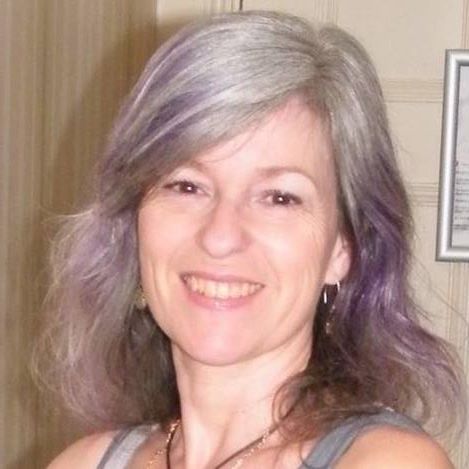
Annie Whitehead is a history graduate who now works as an
Early Years music teacher. Her first novel, To Be A Queen, was long-listed for
the Historical Novel Society’s Indie Book of the Year 2016. Her new release,
Alvar the Kingmaker, is available now. She is currently working on the novel
which was a prize-winning entry in the Mail on Sunday Novel Writing competition
and which she was encouraged by judge Fay Weldon to complete.
Annie's Books

Aethelflaed, the ‘Lady of the Mercians’ was the daughter of Alfred the Great. She was the only female leader of an Anglo-Saxon kingdom. Born into the royal house of Wessex at the height of the Viking wars, she is sent to her aunt in Mercia as a foster-child, only to return home when the Vikings overrun Mercia. In Wessex, she witnesses another Viking attack and this compounds her fear of the enemy.
She falls in love with a Mercian lord but is heartbroken to be given as bride to the ruler of Mercia to seal the alliance between the two Anglo-Saxon kingdoms.
She must learn to subjugate her feelings for her first love, overcome her indifference to her husband and win the hearts of the Mercians who despise her as a foreigner and twice make an attempt on her life.
When her husband falls ill and is incapacitated, she has to learn to rule and lead an army in his stead. Eventually she must fight to save her adopted Mercia from the Vikings and, ultimately, her own brother.
In 10th Century England,nobleman Alvar knows that securing the throne for the young and worthy King Edgar will brand him as an oath-breaker. As a fighting man, he is indispensable to the new sovereign, but his success and power gain him deadly, murderous enemies amongst those who seek favour with the king. Alvar must fight to protect his lands, and his position, and learn the subtle art of politics. He must also, as a man of principle, keep secret his love for the wife of his trusted deputy. Civil war erupts, and Alvar once again finds himself the only man capable of setting a new king upon the throne of England, an act which comes at great personal cost. His career began with a dishonourable deed to help a good king; now he must be loyal to a new king, Aethelred, whom he knows will be weak, and whose supporters have been accused of regicide. Can he bring about peace, reconcile with his enemies, and find personal happiness, whilst all the time doing his duty to his loved ones? And what of the fragile Queen, who not only depends upon him but has fallen in love with him? Aelfhere (Alvar) of Mercia was known to the chroniclers as the "The blast of the mad wind from the Western territories" but also as "The glorious earl." This is his story.
Thursday, January 28, 2016
Historic Places: Stratford-upon-Avon
 |
| Shakespeare's Birthplace |
 |
| Shakespeare's Birthplace (rear) |
Anne Hathaway's childhood home is also restored and open as a museum, displaying more Tudor charm with its English garden and thatched roof. The home remained in her family after she married her famous playwright and visitors can enjoy a visit and step back in time.
 |
| Anne Hathaway's Cottage |
 |
| Henley Street |
I digress, back to the history of Stratford. The whimsical sounding name Stratford-upon-Avon comes from the fact that a Roman road ran along a river where this settlement popped up. 'Straet ford' is the ford by the Roman road, and 'avon' simply means river. In fact, Avon is the name of several rivers in Britain. Thank the Saxons and Celts for their lovely language that makes up for a lack of imagination in naming things.
 |
| Stratford Shops |
Tuesday, January 19, 2016
Historic Places: Cotswolds
 The Cotswold region of England is defined by its low rolling hills, quaint homes built from Cotswold stone, and meadows of sheep outlined by stone walls. This picturesque area is what comes to mind when people imagine their idea of the English countryside. Much of it looks the same as it has for hundreds of years, largely unruined by industry and modernization. A tour through the Cotswolds is ideal for relaxation and taking in scenery.
 The city of Bath is in the southern part of the Cotswolds, and it is the gem of the region with its abbey, Roman baths, and beautiful Georgian Bath stone architecture. Stretching up toward Stratford-upon-Avon, which will be covered in its own post, villages like Stow-on-the-Wold are sprinkled throughout the area, giving visitors charming opportunities to enjoy local culture and history.
 Throughout medieval times and up until industrialization reinvented the economy, the Cotswold region was exceptionally affluent due to the wool trade. One can still see plenty of sheep grazing on the green grass of the Cotswolds, but it has been centuries since wool made anyone rich. In fact, subsidies are in place to keep sheep farming a viable living for those who enjoy it. The prosperous wool merchant is a artefact of the past.
As a designated Area of Outstanding Natural Beauty, the Cotswolds are preserved and protected from new building that would undermine the character of the region. The majority of buildings are created from Cotswold stone, a deeper golden version of Bath stone, so that even the homes and businesses look as though they naturally appeared there. A village that is a wonderful example of this is Stow-on-the-Wold.

Perched on a hill overlooking the surrounding countryside, Stow is an ancient market village that still boasts its medieval era stocks as you enter town. The elegent stone buildings and gardens will give you the feeling that you have stepped back in time, as will some of the passageways that were not built with modern heights in mind! Stow is also the location of a English Civil War battle in 1646, having played host to King Charles I on several occassions throughout the years of the wars.
Subscribe to:
Posts (Atom)