Wednesday, March 3, 2021

Life Between World Wars


My guest today has written about the same era as my novel, Luminous. The 1920s and 1930s fascinate me. How little did people realize that they were living between two World Wars. Their everyday life was making history. Author Liz Harris shares some great insight into what it was like to live at that time. Check out her newest book, The Lengthening Shadow, to experience the building suspense as the world began to realize that another war was approaching.

Welcome, Liz!

~ Samantha

~~~~~~~~~~~~~~~~~~~~~~~~~~~

Life Between the Wars

Guest Post by Liz Harris

The 1920s, the first modern decade, was the most exciting of periods. In this decade, there was not only economic growth, but also a boom in consumer goods. By the end of the decade, women’s lives had been transformed, and women had a voice at last!

At the start of WW1, when the men left the fields and the factories to go off and fight in the war, women stepped in to take their place. No longer was a woman limited to being someone’s wife, domestic servant or governess. The war had opened up to them the world of opportunity. And by the time that the war ended, they’d tasted freedom, and they’d liked it.

When the men returned from war, a large number of women were fired to make way for the men. But many women didn’t want to go back to domestic work, and didn’t. Shop work paid better than domestic work, for example, and gave them more free time. This had a profound effect on society.

So, too, did the fact that in meeting the needs of the war, the developments in technology had come on in leaps and bounds.

Take the changes in housing, for example. There’d been a shortage of housing before the war, and the destruction in the war had added to the shortage. The 1920s, therefore, saw a massive amount of house building, mostly suburban and privately financed. These new houses reflected the changed social situation. There was no longer a need for servant’s quarters as far fewer families had servants. And for the first time, houses were fitted with electric light and electric power, and with an inside toilet and hot running water.

Becontree housing estate built in the 1920s

And with servants being so difficult to get, the woman who, before the war, would sit at the table with the family and wait for the cook to serve the dinner, now found that she had to go into the kitchen and make the meals herself.

So the kitchen started to assume a far greater importance. They became brighter, less cluttered and more stream-lined, making them more pleasant for the woman who now spent a large part of her day in the kitchen. They were much more like kitchens today, in fact.

The larder, too, was the beneficiary of the demand for greater ease in producing meals. Technological advances aided the production of convenience food, to use a modern term, and throughout the decade, there was an increase in volume and variety of food, both imported and also home-produced.

If you opened the larder door in 1920, you’d see Cadbury Milk Tray, Bisto, Saxa Salt, Bird’s Custard and ketchup. And this was the decade of the first frozen peas. Later in the decade, you’d see Jaffa Cakes, potatoes in tins, and Smiths’ Salt & Shake crisps. Corn Flakes arrived from the US in 1924, and the British love of cereals at breakfast was born.

Cadbury’s Milk Tray

There was also a demand for a less fussy way of cooking. Pyrex arrived in the middle of the decade, streamlining the cooking and serving of food, and reducing the number of dishes involved. One-pot meals became very popular, such as fish steamed on top of a saucepan of boiling potatoes. The simplicity of boiled eggs and toast made it a favourite for breakfast.

Fish & Chips’ shops thrived. They were no longer popular solely with the working class, middle-class families, too, would take them home and serve them, still wrapped in newspaper, accompanied by ketchup and pickled onions.

Magazines soon caught on to women’s interest in their house interiors, and to their desire for advice with cooking now that they no longer had servants. The Daily Mail Cookbook appeared in 1920, to be followed two years later by Good Housekeeping. And the Co-op started giving away recipe cards in cigarette packets.

It wasn’t just the foodstuffs that fed the family in the 1920s that changed—there was a post-war spike in alcohol consumption. This was the decade of cocktails. American style cocktails were particularly popular, such as the gimlet, bourbon and the Bloody Mary. New bars and gentlemen’s clubs sprang up throughout the towns. The drinks’ trolley made an appearance in homes, and Bucks Fizz became popular at breakfast.

Accompanying cocktails were canapés. These were the years of egg mayonnaise sandwiches, tomato and salmon paste, smoked mackerel canapés, and salty crackers. People no longer always sat down to eat – food and drink might be passed around.

Some of this may have been influenced by America. Increasingly, people now had a ‘wireless set’, which brought world events and entertainment into the sitting room for the first time. The BBC was founded in 1922. The cinema industry was booming, dominated by Hollywood, which gave a glimpse of a glamorous world across the ocean.

Around 1920, radio broadcasting started to become popular.
A group of women gathered around the radio at the time.

There was a change in social attitudes, too. Social barriers were slightly breaking down, and the way the family lived was altering. It was becoming less formal. The pre-war parlour became the dining room, and the family had a sitting room, in which a chaise longue was frequently seen, as was anaglypta wallpaper, rugs, and standard lamps with a fringe.

It wasn’t just within the house that changes were reflected. Fashions changed, too. Knee-length dresses came into vogue, shoulder-bare dresses and tops, loose cardigans, cloche style hats. But women still wore gloves.

Actress Louise Brooks, with short bobbed hair beneath her cloche hat.

Hair was shorter, and wavier. Think ‘Flappers’ and ‘Roaring Twenties’. Bar and nightclubs thrived, and the taste was for jazz, fast and furious, and American Dixieland music.

I’m going to end by mentioning three Acts which benefited women in the 1920s, and which influenced greatly the lives of all women in the years that followed.

After the Sex Discrimination (Removal) Act, 1919, gave women access to professions such as Law, in 1919, a woman took up a seat in Parliament for the first time. That was Nancy

Astor. From October 1920, Oxford University for the first time admitted women to full membership of the University.

The second Act related to the reform of the Divorce Law. The Matrimonial Causes Act, 1923, put women on an equal footing with men.

Prior to 1923, men could ‘petition the court’ for a divorce on the basis of their wife’s adultery, which would have to be proved. But a woman who wanted a divorce would have to prove not only her husband’s adultery, but also an aggravating factor such as rape, incest or sodomy. The 1923 Act said that a woman no longer had to prove an aggravating factor. It would be sufficient to prove adultery. Of course, I might add, she could still lose the right to her children and also the property she’d brought to the marriage, but it was a step in the right direction.

The third milestone for women with the Equal Franchise Act, 1928, which gave the vote to all women over 21. Prior to this Act, only women over 30, who owned property, had been allowed to vote. The Act also brought equality in inheritance rights and unemployment benefits.

By the end of the 1920s, women had a voice! I think that’s a pretty good achievement for a decade, don’t you?


The Lengthening Shadow by Liz Harris
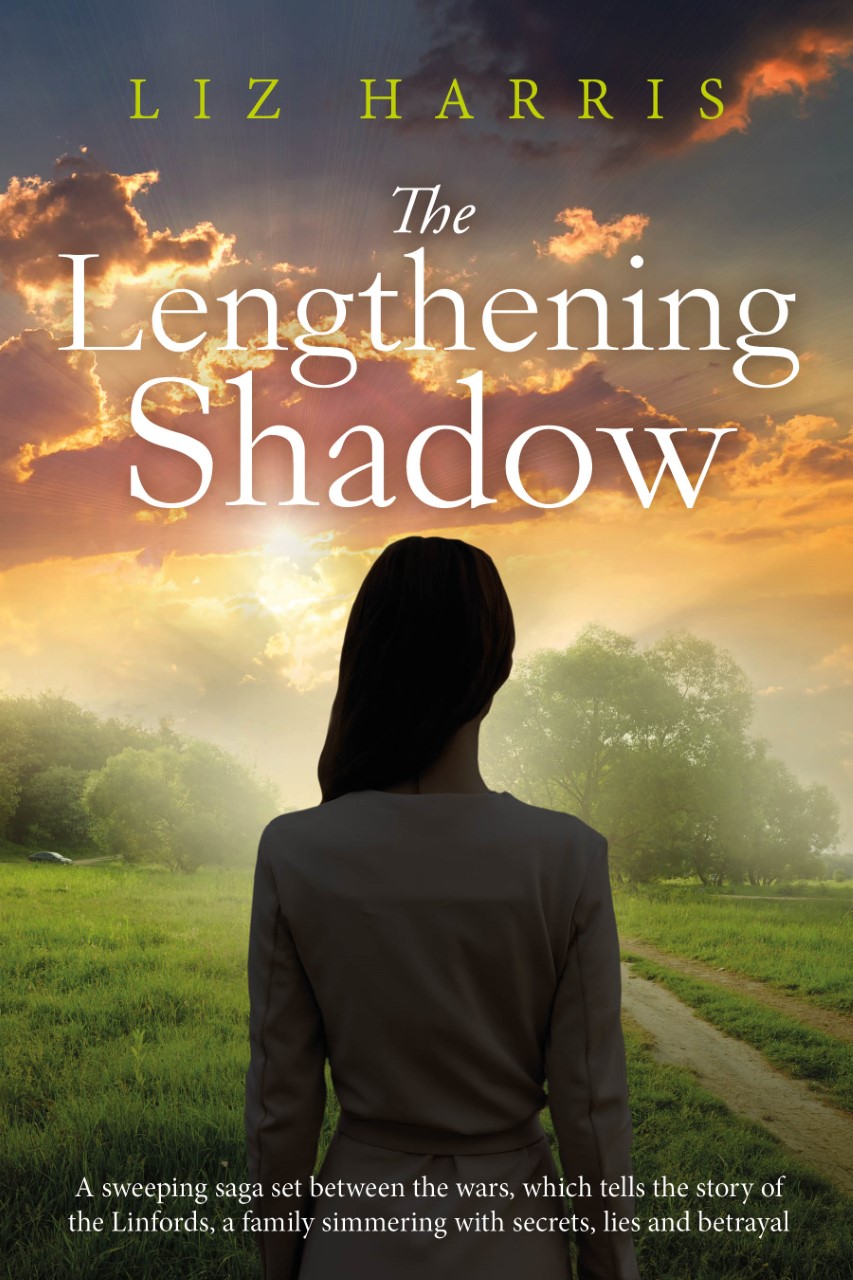

When Dorothy Linford marries former German internee, Franz Hartmann, at the end of WWI, she’s cast out by her father, Joseph, patriarch of the successful Linford family.

Dorothy and Franz go to live in a village in south-west Germany, where they have a daughter and son. Throughout the early years of the marriage, which are happy ones, Dorothy is secretly in contact with her sister, Nellie, in England.

Back in England, Louisa Linford, Dorothy’s cousin, is growing into an insolent teenager, forever at odds with her parents, Charles and Sarah, and with her wider family, until she faces a dramatic moment of truth.

Life in Germany in the early 1930s darkens, and to Dorothy’s concern, what had initially seemed harmless, gradually assumes a threatening undertone.

Brought together by love, but endangered by acts beyond their control, Dorothy and Franz struggle to get through the changing times without being torn apart.

Available now on Amazon UK and Amazon US!


Connect with Liz

Born in London, Liz Harris graduated from university with a Law degree, and then moved to California, where she led a varied life, from waitressing on Sunset Strip to working as secretary to the CEO of a large Japanese trading company.

A few years later, she returned to London and completed a degree in English, after which she taught secondary school pupils, first in Berkshire, and then in Cheshire.

In addition to the nine novels she’s had published, she’s had several short stories in anthologies and magazines.

Liz now lives in Oxfordshire. An active member of the Romantic Novelists’ Association and the Historical Novel Society, her interests are travel, the theatre, cinema, reading and cryptic crosswords. To find out more about Liz, visit her website at: http://www.lizharrisauthor.com

WebsiteTwitterInstagram Facebook


Monday, March 1, 2021

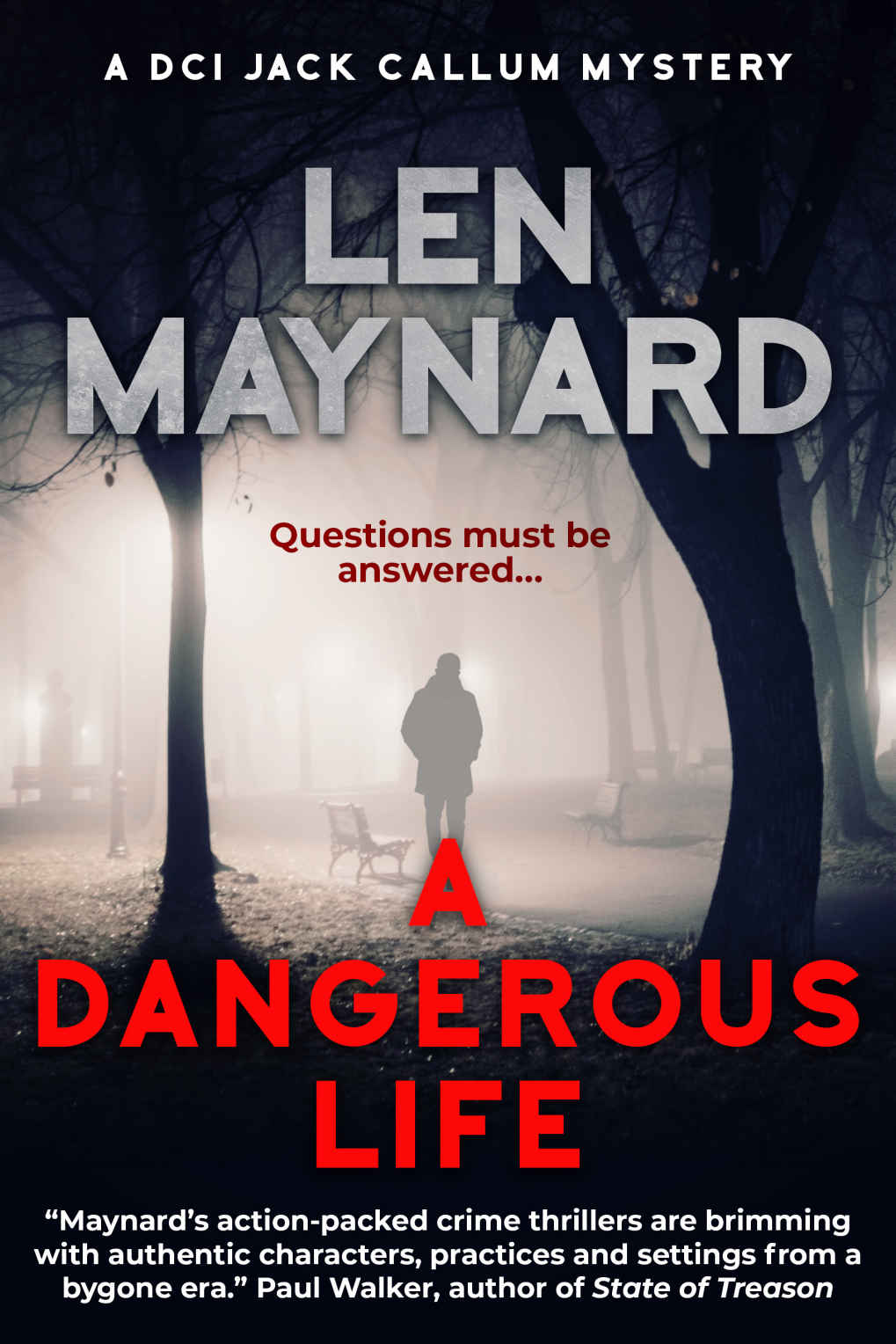
Writing A Dangerous Life


Today's guest takes us into the gritty world of the 1950s gangs and criminals. Welcome, Len!

~ Samantha

~~~~~~~~~~~~~~~~~~~~~~~~~

Writing A Dangerous Life

A Guest Post by Len Maynard


My fascination for the dark underbelly of the entertainment business has been evident since I first started writing back in the 1970’s.

At a funfair I was always more interested by what was happening behind the flashing lights than the rides and sideshows. At the theatre I always wanted to know what was happening behind the proscenium arch once the curtain fell.

The character of Tony Turner had a certain appeal for me – a famous and popular actor whose career was on the slide. It was someone whose life I wanted to explore, to dig down and uncover the secrets he had kept hidden behind the showbiz smile. The fact that he was also my first murder victim gave Jack a very good reason to conduct that exploration on my behalf.

A Dangerous Life also took me away from the middle-class monster of Three Monkeys and allowed me to write about British gangland of the 1950’s, a world I only knew about from watching the black and white B movies at my local cinema.

Growing up, the names of two Edgars – Lustgarten and Wallace – had been my passport to a monochrome world of murder, thievery, blackmail, fraud and all things criminal.

Once I had my background, my characters and my initial murder the rest came fairly easily.

I wrote the opening scene of a thirteen-year-old Gerry Turner confessing to the killing of her brother some months before starting the actual book. It was such a haunting scene that I knew I would have to use it. I was unaware when I wrote it that it would be a springboard into another novel.

Equally I was unaware of how important young Gerry would become and the role she would go on to play in future Jack Callum books. But that in itself has been one of the delights in writing about the Callum world, how minor characters suddenly come into their own and take centre stage.

Norton Common, where Tony Turner’s tortured body was found nailed to a tree, like a lot of places depicted in the books, really exists. It’s a charming and rather lovely area of parkland barely a mile away from where I live, an ideal spot for ramblers and dog-walkers and not a place where a dead body is likely to be found. (Sidebar – a few weeks after finishing A Dangerous Life, a body was found on Norton Common, hanging from a tree. Nothing to do with me, guv. Honest.)


A Dangerous Life is available now on Amazon US and Amazon UK.


Connect with Len Maynard


Born in Enfield, North London in 1953, Len Maynard has written and published over forty books, the majority of them in collaboration with Michael Sims. Ghost story collections, the Department 18 series of supernatural thrillers, stand-alone horror novels, the Bahamas series of action-adventure thrillers, as well as a handful of stand-alone thrillers. As editors they were responsible for the Enigmatic Tales and Darkness Rising series of anthologies, as well as single anthologies in the horror and crime genres. The DCI Jack Callum Mysteries are his first to be written under his own name.

WebsiteWebsite “The DCI Jack Callum Mysteries”Twitter InstagramFacebook


Don't miss the other stops on Len's Coffee Pot Book Blog Tour!


Wednesday, February 24, 2021

Shining Light on a Dark Past: BOLDR Venture Un.Dark


A few weeks ago, I was unexpectedly contacted regarding a unique idea that I am happy to share with you today. It is exciting to share the announcement of the Venture Un.Dark, a watch from BOLDR that honors the dial painters who suffered from radium poisoning to create glow-in-the-dark watches in the first half of the 20th century.

As my readers know, Catherine Wolfe Donohue was one of those women, and I am happy to see her honored and remembered by this lovely timepiece. Learn more in BOLDR's press release below.

~~~~~~~~~~~~~~~~~~~~~~~~~

Shining Light On A Dark Past - BOLDR Supply Co. Pays Tribute To The Radium Girls With The Venture Un.Dark

BOLDR Supply Co. has released a special edition titanium Venture watch that commemorates the Radium Girls, who were young teenage factory workers handling highly dangerous radium-laced luminescent paint, completely unaware of its harmful effects. Their story is a solemn reminder of the watch industry’s dark past which claimed many lives before global health & safety standards were regulated. The Venture Un.dark is available now on www.boldrsupply.co on a limited release of 99 pieces.


SINGAPORE: BOLDR Supply Company is paying tribute to the sacrifices of the Radium Girls with a special edition titanium Venture named Un.dark, after the luminescent paint that was popularly used in the years during and following World War 1. The Radium Girls were a collective of young teenage factory workers who would handle this paint every day without protective equipment, exposing them to its harmful side effects and ultimately causing severe health issues and painful deaths to many. The watch is dedicated to the memory of the fallen girls, featuring an outline of a dial painter on its face and custom artwork on its caseback.


Following its discovery in the early 1900s, radium-laced paint eventually found its way to the US where it was painted on the dials of watches, clocks and airplane dashboards during the first World War. Young teenage girls were hired by industry giants such as the United States Radium Corporation (USRC) in New Jersey, to handle the patented Undark paint. Assured that it was perfectly safe to use, the girls handled the paint without any protective gear and even enjoyed painting their teeth and faces to make them glow in order to attract the attention of local boys. Each time their paint brushes were dipped between their lips to make a fine point for painting, they ingested small amounts of radium which seeped into their bones. Before long, they literally began to glow in the dark, earning them the nickname 'Ghost Girls'. 

At the time, radium poisoning was not a secret - male workers in chemical plants wore lead aprons and face shields when handling radium. Yet somehow, radium-laced products such as cosmetics and toothpaste were being advertised in a positive way. It was later discovered that this misleading propaganda was secretly funded by the industry players themselves, but prior to that virtually no member of the public knew they were slowly being poisoned.

Slowly but surely, damaging effects of radium begin to show - in 1922, one of the USRC workers named Mollie Maggia suffered abscesses in her mouth, disintegrating teeth, and a jawbone that dislodged into her doctor’s hands upon touching it. Horror stories such as these began cropping up and affecting teenage girls all over the country, but they were largely ignored, misdiagnosed, and shamed for unfounded accusations while corporations rushed to cover up their injuries and deaths.

A living Radium Girl descendent, Patricia Bauernhuber, recalls her family’s experience: “My grandparents, parents, and I lived in East Orange, NJ during the first four years of my life, a mile from the site of the infamous USRC watch manufacturing building. Our great-great aunt died a prolonged and painful death from years of working with the substance. Due to the path of the brook that abutted the factory where they dumped their paint waste, 70 years later the area would be a US Super Site for radium cleanup in Glen Ridge and Montclair. It would take many more years of disrupting neighborhoods and destroying property values to clean up those areas. The tragic saga of radium use in Essex County, NJ, and the young women who had to fight for recognition and treatment should be better known,” said Patricia, who expressed her gratitude for BOLDR’s commemoration to the sacrifice of countless Radium Girls.

With cases increasing over years, it took the courage and determination of a few heroic workers such as Grace Fryer in 1927 and Catherine Wolfe Donahue in 1938 to fight against guilty corporations and force governments to tighten work safety regulations. Writer Samantha Wilcoxson chronicled the arduous ordeal in her 2020 novel in hopes of raising awareness of these unsung heroes.


In Samantha's own words, “When I first learned about the fate of dial painters in studios using radium-infused paint, I immediately knew that I needed to write about their story. My novel, Luminous:The Story of a Radium Girl, is my tribute to these women, especially Catherine Wolfe Donohue whose faith and fortitude was an inspiration to me. The injustice and suffering that Catherine and her coworkers endured paved the way for many of the protections that workers have today. I am thrilled to see that BOLDR watchmakers share my passion to recognize the sacrifices of the Radium Girls. The Venture Un.dark is a lovely memorial to the hundreds of women who were exploited in order to create glow-in-the-dark watches. The ‘ghost girl’ on the watch face is a poignant reminder of the work these women did, and I especially admire the thoughtful engraving on the back. This watch is a wonderful way to honor women who are too often a forgotten part of our history."

The work safety laws that resulted from the sacrifice of Radium Girls eventually saved the lives of countless workers around the world, yet this story is not well-known even to those in the watchmaking industry. The Venture Un.dark was created to keep their legacy alive, and to thank the Radium Girls for their priceless contribution to society.

Visit www.boldrsupply.co to pre-order the Venture Un.dark today.


BOLDR Supply Company designs watches and gear to be worn, used and abused every day. When you wear a BOLDR product, you’re becoming part of a global #beBOLDR movement - a shared passion for the adventurous side of life, with a watch that’ll never leave your side.


Wednesday, February 17, 2021

The History behind Luminous: The Story of a Radium Girl


 As a historical fiction author, one of the most common questions I am asked is 'How much of that story is true?' In all of my novels, I strive for historical accuracy as much as possible and try to fill in the gaps in a way that fits with historical figures' personalities and circumstances. Since Luminous takes place in a much more recent era than my previous works, I was blessed with source material from newspapers, personal letters, and even a visit to Ottawa, Illinois, where Catherine Wolfe Donohue and her friends lived.

If you have read Luminous, you know that each chapter begins with a historical quote from one of the people included in the novel or from a scientist or journalist of that era. I did this to constantly remind readers that this story is true. When you feel yourself getting angry at the actions (or lack thereof) of Radium Dial or you can't quite believe the suffering the women endured, remember that it is not a figment of my imagination.

One of the first and most priceless sources of material I discovered when researching Catherine's story were the newspaper articles stored by Len Grossman, son of Catherine's attorney, Leonard Grossman. Scrolling through the headlines feels surreal, and one can imagine the public's reaction at the time - those who felt the same anger and sympathy that we do and those who supported the radium companies and assumed the women were lying to make a quick buck. I appreciated that these articles offered images of the women. I had real faces to attach to the familiar names. I discovered that Catherine wore a polka-dot dress and insisted on having one on my book cover.


My next step was visiting Ottawa, Illinois, where Catherine lived her short life and worked at Radium Dial. The old schoolhouse that was home to Radium Dial was long gone - the material from its destruction having been spread around town and used for land fill, exacerbating the radiation problem that continues to plague the area. However, I was able to attend church at St Columba, where Catherine had been baptized and married. This was an important place to include in her story and it made me feel closer to her to be there. I was also able to climb Starved Rock and drive by the house she inherited from her aunt and uncle.


Today, Ottawa has a memorial to the dial painters who suffered and died due to the negligence of the radium industry. It isn't centrally located like the Lincoln-Douglas statue but sits on a quiet corner a bit away from the busier part of the historic downtown district. At first that made me a bit sad, but later I found it fitting. Catherine and her friends never wanted to be the center of attention. They were forced into it.

Not far away from Ottawa, the LaSalle County Historical Museum holds the Pearl Payne collection. Again, readers of Luminous will remember that Pearl was one of Catherine's closest friends who outlived her by several decades though she also suffered effects of radium poisoning. This collection gave me the most intimate look into the women's lives as I read their personal letters, quotes from which I included in dialog of my novel. I'll never forget holding a letter written by Catherine where she begged Pearl to visit because she was 'so lonesome and blue.' Pearl also kept a collection of newspaper clippings and record of the testing she underwent for study of the radium in her body. She kept telegrams from Leonard Grossman and a memorial card from Catherine's funeral.

Finally, I was able to locate - after much wandering and searching - Catherine Donohue's simple grave. It is located just outside town, near that of her husband, Tom, who never remarried. The historian part of my brain had expected something more monumental, but, like the downtown monument, I should not have been surprised that Catherine's memorial stone was simple and unobtrusive.

I wish I could have written Catherine a longer story. I wish she could have been healed and won a huge monetary settlement, but the truth of her story did not allow me to do so. That's the problem with history. It cannot be changed, but, hopefully, we learn from its lessons.


Haven't read Luminous yet? Read the first chapter for free HERE or purchase it on Amazon in paperback on on Kindle.


Saturday, February 6, 2021

The Fall of Kings

 I am happy to welcome a new guest to my blog today. Author Stuart Rudge's Legend of the Cid series transports readers into 11th century Spain, a world of knights, battles, and precarious crowns. To celebrate the publication of his third book, The Fall of Kings, Stuart is here to discuss the history behind his story.

Welcome, Stuart! 

~ Samantha

~~~~~~~~~~~~~~~~~~~~~~~~~

The History behind The Fall of Kings

Guest Post by Stuart Rudge

The years 1071-1072 proved to be a pivotal period in the story of Rodrigo Diaz de Vivar, the man known as El Cid, and also of medieval Spanish history. For in this year, all three sons of Fernando the Great were either deposed from their thrones and sent in to exile, or killed, and four of the five siblings had been involved in a dynastic feud. By the end of the year, only one man remained to take all three thrones, and ruled over a kingdom as vast as his father had done.

Upon Fernando’s death in 1065, his kingdom had been divided between his sons; Sancho became King of Castile, Alfonso received Leon, and Garcia inherited Galicia. His daughters Urraca and Elvira gained control of the Leonese cities of Zamora and Toro, respectively. Relations between the brothers had been tense ever since the death of their mother Sancha in 1067. Yet despite the tension, the only moments of note came from Alfonso wresting control of the parias tribute of Badajoz from Garcia in 1068, and a few months later at the battle of Lantadilla; although it was touted as a Castilian victory over Leon, it is only recorded as a minor skirmish between the two kingdoms.

The division of Fernando’s kingdom: Copyright Stuart Rudge


Tensions eventually came to a head in the year 1071, with the conquest of Galicia. There seems to be confusion over the events of the conquest itself, or simply they do not add up. One source claims that Alfonso and Sancho met in private some months prior, and conspired to conquer Galicia and divide the realm equally; a surviving document names Alfonso as King of Leon and Galicia, and Sancho as King of Castile and Galicia, at the same time.

Another source suggests Sancho rode across the kingdom of Leon, using the excuse of a pilgrimage to Santiago de Compostela, then fell upon Garcia and forced him to submit. And a final source claims Sancho sent Rodrigo to pluck Garcia from his crumbling kingdom and escort him to Burgos as a prisoner. In any instance, it would prove difficult for Sancho to rule Galicia, given that Alfonso’s domain lay directly between the two. It is likely that it was Alfonso who claimed Galicia, as charters from the king of Leon from the time have Galician bishops as signatories, and Garcia was eventually sent in to exile in Seville. This left Alfonso and Sancho to fight for the ultimate prize.

The decisive clash came at Golpejera, some thirty kilometres west of the Pisuerga River, which was the natural barrier between Leon and Castile. The date of the battle is accepted as being between 2nd and 5th January, 1072, at a time where winter would have settled in the plains of northern Spain and made for hellish conditions for a battle. This suggests Sancho wanted to catch Alfonso without the bulk of his forces from Asturias and Galicia, as these would have taken some weeks to assemble. Legend places Rodrigo at the heart of the battle as Sancho’s alferez, or standard bearer, and though it is believed Alfonso carried the day, the forces of Castile rallied during the night and struck back; Rodrigo is said to have personally captured Alfonso and delivered him in chains to his brother. How much of this is true and simply included for epic narrative is debated. Regardless, Sancho bested Alfonso and was crowned king of Leon, Castile and Galicia on 12th January, and Alfonso was sent to the dungeons of Burgos.

Yet Sancho’s reign was doomed from the start. The Leonese did not support his tenure as king; indeed Bishop Pelayo of Leon, the most senior member of the clergy, refused to place the crown upon Sancho’s head. The sheer size of the realm proved another sticking point. For example, to travel from Leon to Portugal, then Galicia and Asturias, and finally to Burgos and back to Leon would take several months on the road for a mobile court, and for a new monarch like Sancho to gain the support of all of his subjects, it would take a considerable deal of time and effort. And to garner more support, it was necessary for Sancho to appease his sisters, Urraca and Elvira. The infantas were ever present in confirming Alfonso’s charters, but had much less of a role in Sancho’s court. The new king seemed to strike a bargain for their backing by sending Alfonso in to exile to Toledo instead of keeping him imprisoned. But ultimately, Sancho’s short tenure as king would soon come to a bloody end.

Urraca, along with Pedro Ansúrez of the Beni Gomez clan, who was a close friend and advisor to Alfonso, openly rebelled against Sancho’s rule and chose Urraca’s domain of Zamora as their bastion. Sancho was killed before the walls of the fortress on the Duero in early October, although there is debate about the nature of the conflict that took place. The

Najerense Chronicle would tell us that Sancho besieged the rebels, and that a man named Velliti Ariulfi, posing as a deserter and offering to show Sancho the weak spot in the defences, murdered him. Rodrigo allegedly chased him back to the city and, in a grief stricken rage, faced off against fifteen enemy knights, killed several and put the rest to flight.

The Death of Sancho II before the walls of Zamora
Image source: https://www.findagrave.com/memorial/148751052/sancho_ii_king-of_castile

The final events of the year are some of the most iconic in the story of the Cid. Upon hearing of Sancho’s demise, Alfonso returned from exile in Toledo and, after securing the crowns of Leon and Galicia, proceeded to Burgos to confirm the Castilian surrender. The epic scene in the Charlton Heston movie of El Cid, where Rodrigo forces Alfonso’s hands on to a bible to swear the king had no part in Sancho’s death, is purely fictional, or at least exaggerated. It is intended to fall in line with the legend that Rodrigo forced Alfonso to swear before the nobility of Castile that he was innocent of conspiracy and murder before they would accept him as their king, but there is no historical record of it. If this actually happened, we would expect Rodrigo to be punished, or at least be made an example of. Instead, we see his name as a signatory on some of the first charters Alfonso issues upon his confirmation as the one true king of Leon-Castile, showing Alfonso openly admitted him it to his court, albeit in a reduced capacity. From a historical point of view, it is not hard to imagine there would have been some sort of resistance to Alfonso’s coming in a muted capacity; most likely some nobles like Rodrigo would have wanted assurances about the new king’s intentions, but would not have gone so far as to slam royal hands upon a bible, in the hopes of securing some sort of position in the new regime.

El Cid makes Alfonso swear his innocence in the church of San Gadea
Image source: https://laene.blog/2018/01/27/oath-of-santa-gadea/

We may never truly know the circumstances of how Alfonso won the crown, but it left him as the sole ruler of a large kingdom, with members of all three districts in his court. Yet Rodrigo’s time in Alfonso would bring mixed fortunes. Whilst Alfonso recognised the champion of Castile’s service to his brother, Rodrigo did not enjoy the level of prestige he experienced in Sancho’s court. Furthermore, conspiracy and jealously would plague his service in the years to come.


The Fall of Kings is available now on Amazon UK and Amazon US.


Castile. 1071AD

Three kings. One crown.

After Sancho II of Castile dispatches his champion Rodrigo Diaz de Vivar to capture his brother, King Garcia of Galicia, he hopes it is a defining moment in his quest to reunite the lands of his father under one banner. But Alfonso VI of Leon is one step ahead, and has already added the lands of Galicia to his domain. When the only alternative is war, Sancho turns to Rodrigo to lead the armies of Castile, and he must use all of his tactical acumen to defeat the Leonese in the field. Only one son of Fernando can claim victory and become the Emperor of Hispania.

Rodrigo and Antonio, now a knight of the realm, find difficulty adjusting to the new regime. Dissent and unrest run rife throughout the kingdom, and the fear of a knife in the dark from enemies old and new hangs heavy upon the pair. But if it is allowed to fester, it threatens to undo all that has been achieved. Can Rodrigo and Antonio root out the enemies of the king, and prevent chaos reigning throughout the land?

The Fall of Kings in the breath taking third instalment of the Legend of the Cid.


The Fall of Kings is available now on Amazon UK and Amazon US.


Connect with Stuart


Stuart Rudge was born and raised in Middlesbrough, where he still lives. His love of history came from his father and uncle, both avid readers of history, and his love of table top war gaming and strategy video games. He studied Ancient History and Archaeology at Newcastle University, and has spent his fair share of time in muddy trenches, digging up treasure at Bamburgh Castle.

He has worked in the retail sector and volunteered in museums, before working in York Minster, which he considered the perfect office. His love of writing blossomed within the historic walls, and he knew there were stories within which had to be told. Despite a move in to the shipping and logistics sector (a far cry to what he hoped to ever do), his love of writing has only grown stronger.

Rise of a Champion and Blood Feud are the first two instalments of the Legend of the Cid series. He hopes to establish himself as a household name in the mound of

Bernard Cornwell, Giles Kristian, Ben Kane and Matthew Harffy, amongst a host of his favourite writers.

Connect with Stuart through his blogFacebook, or Twitter.