Showing posts with label Blog Tour. Show all posts

Friday, October 8, 2021

Here There Were Dragons . . . and a ghost story challenge!


Being involved in the publishing of Hauntings has been a great experience. It is the first Historical Writers Forum anthology, and I hope there will be many more! At first, I wasn't quite sure what I thought of the idea of writing a ghost story. It was not something I had ever considered, but it turned out to be such fun. 

My guest today, Kate Jewell, also wrote a short story for Hauntings - her first published book - congratulations, Kate! Her story has already been mentioned as a favorite by one reviewer, and I think my readers will love it too. I am happy to welcome Kate to the blog today to talk more about her story, Here There Were Dragons.

~ Samantha

~~~~~~~~~~~~~~~~~~~~~~~~~

Here There Were Dragons 

Rising to the Hauntings challenge, becoming immersed in the mythical culture of Somerset, and going in search of a ghost.

Guest Post by Kate Jewell


Last November, (goodness, was it eleven months ago?), apart from getting panicky about packing up for my move from Leicestershire down to temporary accommodation with my daughter in Somerset, I was participating in a small critique group of writers. One evening I settled down to respond to various Messenger posts, one from Paula Lofting. Expecting to continue our previous day’s discussion on authorial voice, imagine my surprise when the conversation went like this:

Paula: I have something to ask you.
Me: Yes?
Paula: How would you like to join a bunch of us in writing an anthology of ghost stories for next year’s Halloween and have it published in a compilation?
Me: Sounds good. Tell me more.
Paula: Well, it’s me, Sharon Bennett Connolly, Samantha Wilcoxson, Lynn Dawson and Stephanie Churchill and we hope to enlist a few others. 10,000 story to be published for Halloween.
Me: 10,000 stories or 10,000 words? (grinning emoticon)
Paula: words lol
Me: Anything goes? Historical though, I presume.
Paula: Yes, but anything goes. I think probably we write in the period we usually would write, but also you might have an idea that’s local to you.
Me: Something West Country, then. My new area.

Longish pause while I digested this unexpected offer. Why on earth would these successful published authors want inexperienced newbie on their project? Well, it couldn’t be any more stressful than moving house? Could it?

Me, diving into unknown territory: Count me in!

A few days later, it finally sank in. A story up to 10,000 words – they wanted me…ME…to write 10,000 words – two chapters worth – in under twelve months – with a proper beginning, middle and end. The only other short story I had ever written had been 3,500 words and had taken me ages. And what on earth was I going to write about? Historical fiction, yes. But ghost stories? Definitely not my thing.

Inspiration finally struck on a miserable, wet, end-of-December day. Desperate to get out after months of lock down, we took a family excursion to Castle Neroche Forest on the edge of the Blackdown Hills. As we walked through this Forestry Commission mixed woodland, I was mesmerised by the lichen and moss-covered trees swathed in dripping ivy. Even in winter the terrain was stunning; high banks and deep valleys, steep tracks meandering into the distance, the sound of trickling water and two dragon heads carved into the remains of a fallen tree.

Carved wooden dragons face it out across the path

An information board told of a Norman motte-and-bailey castle built on the remnants of an old Iron Age Hill Fort, the motte tower overlooking the vast Taunton Vale, and I began to imagine a ghostly encounter under the trees beneath castle ramparts. Only what I scribbled down wasn’t making sense. I couldn’t work out what the ghost’s history was and who the apparition would choose to haunt. And what were those dragons doing in the forest? I needed research; that addiction that sends me chasing after ever-expanding threads that are crying out to be followed into a tangle of facts, dead ends and improbabilities. Surpassing himself, the lovely Mr Google took me by the hand and directed me towards a wealth of information, mostly in academic papers and land surveys.

The original Iron Age hill fort was constructed around 700BCE on a promontory at the northern edge of the Blackdown Hills. The natural defences of the 150ft escarpment were augmented by earth banks creating a secure enclosure. During the Roman occupation, the site was enlarged as a military camp in the campaign against rebel tribes but fell out of use after the Romans left Britain. In 1067 William the Conqueror’s half-brother, Robert, Count of Mortain, took advantage of the ancient earth works and built a motte-and-bailey castle. Preferring his castle at Montacute, he abandoned Castle Neroche 20 years later.

Castle Neroche: plan of site from Rev Warre’s paper, 1854
Image from the Biodiversity Heritage Library

It wasn’t until around 1138, during the civil war, known as the Anarchy, between King Steven and his cousin, the empress Matilda, that Castle Neroche was briefly refortified. The motte ditch was enlarged, and the wooden keep was replaced by a small stone tower, surrounded by a defensive wall. By 1147, the conflict was petering out and the need for a fortress guarding against incursions by Matilda’s supporters from the west diminished. By the mid 13th century, the castle was in a ruinous state, the stone no doubt plundered for local building. The surrounding land was a royal forest until 1633.

Acquired by the Forestry Commission in 1947, the immediate area to the north and east of the castle is now managed commercial mixed woodland as part of long-term proposals to restrict conifers to the poorer soils and expand broadleaf trees with dedicated woodland pasture and permanent open spaces.

Mysterious paths and steep steps in Castle Neroche Forest

Beyond the carpark and hidden behind the tree-clad southern ramparts, is Castle Neroche Farm. One of the forest paths, leading to the viewpoint on the motte, skirts a rough hedge and a fence. Through the bushes you can glimpse farm buildings and the gable end of a modest farmhouse, built in the outer bailey enclosure in the early 1830s. Could this be the venue for my story? What would an early Victorian farmstead be like? What about the family that lived there? Why would the place be ‘haunted’? Something to do with the 12th century castle perhaps.

Searching for images of old farming practices, I stumbled across a series of detailed papers about farming in the 19th century presented to the Devonshire Association at the begin of the 1920s. There were meticulous descriptions of the Victorian farmhouse exterior arrangement and internal organisation, based on studies of several old Devon ‘bartons’, or larger farms. Being in south west Somerset, my farmhouse couldn’t have differed greatly from those in the adjacent county of east Devon. I had struck gold; I could now visualise the farming family living amongst the remnants of this old castle, though my imaginary farmhouse bore little resemblance to the real one. I visualised my farmer, his wife, two older sons, a 15-year-old daughter and two much younger boys; toyed with names. Little Tommy for the youngest and, for the daughter, Annie, my main character.

The farmhouse at Castle Neroche Farm built c.1833 © Roger Cornfoot 2009

One research paper, presented to the Somerset Archaeological and Natural History Society in 1854, was a detailed survey of the Castle Neroche site by the Rev F Warre. His enthusiasm for his subject is clear, and he ends with an anecdotal twist; a tale of treasure seekers digging for money in the escarpment and meeting a gruesome end. This sent me down another rabbit hole of research, but the Reverend Warre proved elusive. I found little about him apart from Census records and the odd mention in the journals of the aforementioned society, of which he was a founding member in1849, being their General Secretary until 1867. He was the vicar of the Church of St. Mary the Virgin, in Bishops Lydeard, Somerset from 1836. He obviously had a great interest in the area’s history, and I could imagine him being splendid company with many tales to tell. Here was someone I might be able to use in my story.

None of this research explained why there were those two opposing dragon heads in the forest.

Dragon on the west side of the main path

Following up on the story at the end of Rev Warre’s paper, and knowing there are many mythical tales of buried treasure in the West Country, I went in search of Somerset legends. To my delight I found numerous mentions of dragons. I came across a fantastic book by Brian Wright specifically on Somerset Dragons, not only retelling mythical tales but presenting a factual record of dragon ‘portraits’ decorating churches in stained glass and carvings, public house signs, decorating old and modern buildings, in street art and as the centre piece of the Somerset county coat of arms. Somerset is awash with dragons; Brian Wright tells us. “Among the counties of England, Scotland and Wales, Somerset seems to have more dragon legends and various items of ‘evidence’ than most other counties…. Only Yorkshire exceeds its stories by two, but with a lot less ‘evidence’.” (Somerset Dragons, Tempus Publishing 2002). And in this book is an account of the drowning of the Castle Neroche dragon. There were more tales lurking on the World Wide Web, but to combine the Rev Warre’s anecdote with Brian Wright’s story would give me a foundation on which to build.

At last I had found a historical setting: the motte-and-bailey castle in 1148 and Castle Neroche Farm 700years later, a protagonist: the farmer’s teenage daughter, and a supporting character: the Reverend Francis Warre. I also had a kind of antagonist: a dragon.

All I needed now was the ‘ghost’ and a narrative to weave it all together.

Further reading and essential if you want to go dragon spotting in Somerset:

Somerset Dragons, Brian Wright, Tempus Publishing, Stroud UK, 2002

~~~~~~~~~~~~~~~~~~~~~~~~~
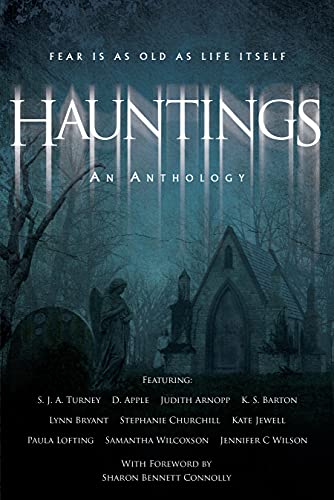

Find out how Kate brought this fascinating history together into a thrilling ghost story in Hauntings - available now on Amazon!

FEAR IS AS OLD AS TIME ITSELF


Chilling Tales that will take you through a labyrinth of historical horror.

You will encounter a tormented Roman general.

A Norse woman who must confront her terrifying destiny.

Meet a troubled Saxon brother, searching for his twin's murderer.

A young nurse tries to solve the mysteries of an asylum for the insane.

Down the passages of time, Henry VIII and Anne Boleyn wander through a haunted garden and elsewhere, a lost slave girl is the soul survivor of a mass slaughter.

These are just a few of the eerie tales which ensure that Hauntings is not for the faint-hearted.


Hauntings is available in paperback and for Kindle
worldwide on Amazon.


Connect with Kate

Kate Jewell was brought up in Portsmouth and educated at boarding school in Bournemouth, both on the English south coast. An avid reader, Kate was grabbed by historical fiction at an early age, devouring Rosemary Sutcliff’s The Eagle of the Ninth late into the night, with the aid of a torch under the bedcovers in the school dorm. A lifelong passion for the 15th and 16th century was ignited by a history teacher who, on hearing complaints about having to do more ‘boring Napoleonic battles’, suggested Kate joined an archaeology summer camp in Southampton, run by medievalist and university professor Colin Platt. Fascinating stuff for a 16-year-old.

Unsuccessfully applying to Brighton Art School, she ended up miles from the sea in Coventry, her pin-in-the-list second choice, where she graduated in Graphic Design. She has worked in advertising, as a book designer for a children’s book publisher, in a busy Local Government graphic design studio, and as a Creative Arts lecturer in Further Education. After retiring from her proper jobs, she worked part time in a Register Office doing weddings and registering births and deaths. After over thirty years in the East Midlands, she has finally escaped from landlocked Leicestershire to pastures new in West Dorset; a welcome return to the south with the Jurassic Coast only 12 miles away. Her elder daughter, son-in-law and two grandsons live nearby in Somerset. Her younger daughter and her partner are renovating a Provençal farmhouse, so keeping up with her two young “French” granddaughters has forced Kate to become expert in Zooming! When not writing, she can be found pottering in the garden, painting and drawing in her studio, or exploring the countryside with her camera.

Kate’s short story, The Daisy Fisher, set in 18th century Cornwall, won the 2019 Historic Writers Association/Dorothy Dunnett Society Short Story Competition, and her long-running series of articles on the Dorothy Dunnett book cover art is published in Whispering Gallery, the society’s journal. She has been working on a fiction project, following a group of adventurers through the turbulent transition from the Plantagenets to the Tudors. This has been going on for so many years Kate is amazed her characters haven’t used her procrastination an excuse to abandon their weapons and go in search of a quite retirement.

Here there were Dragons, Kate’s first foray into spooky fiction, is a ghost story with a difference, a dual era tale with a 700-year time gap. It seems as if the short story format is king at the moment!

Connect with Kate on Facebook and Twitter.

Interested in the Historical Writers Forum? Find them on Facebook, Twitter, and YouTube.


Wednesday, October 7, 2020

Stepping Back into Saxon England: Æthelflæd’s Daughter


Annie Whitehead and Helen Hollick are two amazing historians and authors, so I was thrilled when Annie told me about their joint blog tour. Saxon England may be a little distant for some of my readers, but, trust me, it's worth the trip!

Welcome Annie!

~ Samantha 

~~~~~~~~~~~~~~~~~~~~~~~~~

Æthelflæd’s Daughter

A Guest Post by Annie Whitehead

I’m delighted to be Samantha’s guest today as part of the Stepping Back into Saxon England tour with Helen Hollick. Recently I was talking to someone about the enduring popularity of the Tudors and why it should be so. I think the fascination is partly to do with two things: a king executing his queens is unique in English history, and women succeeding women to the throne is something which had never happened before and has not happened since, unless you count Anne’s succeeding William and Mary.

Well, I say it hadn’t happened before. It did, once, albeit briefly.


I’ve written a great deal about Æthelflæd, Lady of the Mercians, in my novel To Be A Queen, and both my nonfiction books, Mercia: The Rise and Fall of a Kingdom and Women of Power in Anglo-Saxon England. She was the daughter of Alfred the Great, and she was born at a time when ‘Viking’ incursions were not only a major nuisance, but had already seen two kingdoms - East Anglia and Northumbria - fall pretty much permanently under Danish control. Only the very top part of Northumbria, some of Mercia and the whole of Wessex were still under English rule. Alfred, and later his son, Edward, began working alongside Æthelred, Lord of the Mercians and, when a concerted joint effort pushed the invaders out of London, the alliance was sealed by the marriage of Alfred’s daughter Æthelflæd to Æthelred, Lord of the Mercians.

We don’t have much information for the early years of their marriage, except the details of the continuing campaign against the Danes. Around the year 902, however, the chronicles stop mentioning Æthelred’s name and the Irish annals make it clear that he was suffering from some kind of illness, which prevented him from fighting but did not stop him giving strategic advice to his wife. This gives me the impression that by this stage, this was one amazing power couple, happy to support and protect each other - she looking after him while he was ill and he being happy to delegate to a ‘mere’ woman.

History records - and yes, it’s a bit of a spoiler - that after this protracted illness she ended up ruling alone. That’s also worth a moment’s pause. Only once before had a woman ruled an English kingdom, and it didn’t end well. Seaxburh, queen of Wessex, was the only Anglo-Saxon woman to be included on a regnal list. She ruled for somewhere between one and two years in the seventh century but as a later chronicler said, the men of the kingdom would not go to war under the leadership of a woman. I think ‘war’ is the clue here. It’s likely that she was actually ruling as regent for her son during a time of conflict over the succession. At any rate, her rule was not long, and was not successful.


Æthelflæd, on the other hand, ruled Mercia for seven years on her own and in that time she worked in partnership with her brother Edward to wrest occupied Mercia out of Danish hands, building defensive towns called burhs, and famously taking Derby with her troops and losing in the fighting ‘four thegns who were dear to her.’ Derby was one of the strategically important ‘Five Boroughs’ of the Danelaw (the other four being Lincoln, Stamford, Nottingham and Leicester). By the time she died at Tamworth, their work was almost done.

From beyond the grave though, she pulled off another remarkable feat. Her daughter Ælfwynn succeeded her.

We know virtually nothing of Ælfwynn’s life, not even her year of birth, but we do know that she witnessed a charter of her mother’s, issued at Weardbyrig (unidentified but possibly in Shropshire) in 915, when Æthelflæd was in the midst of her intense burh-building programme. Even if Ælfwynn had been born late in the marriage – and it seems unlikely that she would have been conceived after her father fell ill in around 902 – she probably wouldn’t have been on campaign with her mother if she was still tiny. Most likely she was a young adult at the very least. Given that it would have been far safer for her to remain in the Mercian heartland, there could well have been a specific reason for her presence at Weardbyrig, that of watching and learning from her mother, with the intention that one day she would take over.


But if she was already a young woman, why had she remained unmarried? Again, I think it might be because she was being groomed to take over the country and keep it in Mercian hands. It’s said that her mother raised the future King Athelstan in Mercia but she clearly didn’t consider him her heir and, when she died, the Mercian council declared for Ælfwynn. We know this because, like Seaxburh all those years ago, her tenure was short-lived. Her uncle Edward, who’d been happy for his sister to rule, wasn’t so accommodating when it came to her daughter and according to the annal known as the Mercian Register, she was ‘deprived of all authority’. Thus they clearly believed that she was rightful ruler.

We don’t know what happened to her after that, other than that she was probably taken into Wessex. A later charter speaks of a holy woman called Ælfwynn, but there is no proof at all that this was the same woman. Like so many before and after, she simply disappeared off the pages of history.

But we should not overlook that very important point. In Mercia in 918 a remarkable thing happened: a woman ruler was succeeded by a woman ruler. This would not happen again until the time of the Tudors.

~~~~~~~~~~~~~~~~~~~~~~~~~

About the Author:


Annie has written three novels set in Anglo-Saxon England. To Be A Queen tells the story of Æthelflæd, Lady of the Mercians. Alvar the Kingmaker is set in the turbulent tenth century where deaths of kings and civil war dictated politics, while Cometh the Hour tells the story of Penda, the pagan king of Mercia. All have received IndieBRAG Gold Medallions and Chill with a Book awards. To Be A Queen was longlisted for HNS Indie Book of the Year and was an IAN Finalist. Alvar the Kingmaker was Chill Books Book of the Month while Cometh the Hour was a Discovering Diamonds Book of the Month.

As well as being involved in 1066 Turned Upside Down, Annie has also had two nonfiction books published. Mercia: The Rise and Fall of a Kingdom (Amberley Books) will be published in paperback edition on October 15th, 2020, while her most recent release, Women of Power in Anglo-Saxon England (Pen & Sword Books) is available in hardback and e-book.

Annie was the inaugural winner of the Dorothy Dunnett/HWA Short Story Competition 2017.

Connect with Annie: 

On Amazon

On her blog 

On Twitter

On her website

On Facebook


Monday, August 17, 2020

Medieval & Tudor Childbirth


Toni Mount joins us today as part of her blog tour celebrating the publication of her latest medieval mystery, The Colour of Shadows. If you love Sebastian Foxley as much as I do, you won't want to miss it! If you haven't tried this series, I couldn't recommend it more highly - get started with The Colour of Poison. Toni's knowledge of the 15th century shines marvelously in this novel, and she has kindly shared some in depth expertise on what women endured to bear children during the medieval and Tudor times.

You can read my full review of The Colour of Shadows on Goodreads.

Join me in warmly welcoming Toni Mount to the blog today!

~ Samantha


~~~~~~~~~~~~~~~~~~~~~~~~~~~~~~~~~~~~~~

Medieval & Tudor Childbirth

A guest post by Toni Mount


In my new Sebastian Foxley murder-mystery novel The Colour of Shadows, set in medieval London, Seb’s wife, Emily, is approaching the time of her second confinement. But what were the likely experiences of a mother-to-be in the fifteenth and sixteenth centuries?

As the time of her delivery approached, the pregnant woman of the Medieval and Tudor eras had much to do to prepare for the big event. Some felt trepidation and fear for we know that, during the reign of King James I, Elizabeth Joceline not only stitched the swaddling bands for the coming baby but sewed a shroud for herself as well – sadly, this was required nine days after the birth of a daughter in October 1622. It is certain that Elizabeth was not alone in feeling so pessimistic; perhaps she was even continuing a Tudor tradition.

Today, childbirth is seen as a case of medical intervention but in the fifteenth and sixteenth centuries, male physicians and surgeons avoided the female-only occasion that centred on supporting the mother-to-be through her labour, as well as the days before and after the birth. This time in a woman’s life was called a ‘confinement’ for good reason as she kept to her chamber, away from society; a virtual prisoner of her condition. Royal and noble women ‘took to their chambers’ as early as four to six weeks before the baby was due for a period of rest and quiet, to build up their strength for the coming ordeal and to prepare their souls in case the worse should happen. This lengthy time of retirement was a means of demonstrating the families’ wealth and status as it meant the women no longer carried out any domestic duties, but it was also a precautionary measure because it was difficult to determine the exact date of conception. Even if that was known, the precise term of a pregnancy wasn’t understood and thought to be variable, so it was impossible to know the due date.

During troubled times for the House of York, on All Souls’ Day, 2 November 1470, Queen Elizabeth Woodville, wife of the exiled King Edward IV, gave birth to Prince Edward while she was in sanctuary in the Abbot’s House at Westminster Abbey. She had expected to give birth in the splendid lying-in chambers ready prepared for her at the Tower of London, but when the tables turned against her husband, she was forced to flee these sumptuous comforts with her mother and daughter to Westminster Abbey. In spite of the Earl of Warwick’s – then Regent of England – personal animosity towards the queen and her Woodville relatives, he wasn’t cruel to Elizabeth and he sent Lady Scrope and others to assist her in her delivery in addition to paying their fees.

Anne Boleyn’s childbed chamber at Greenwich was redecorated, almost rebuilt with a false ceiling installed, tapestries hung and a special cupboard made on which to display her gold and silver plate to impress any (female) visitors. Those who attended her as steward, butler, carver, etc. were all women appointed for the duration, taking on these male roles. King Henry VIII is mentioned as her only male visitor during her tedious wait but whether any priests were allowed to attend her, I haven’t been able to discover. We know midwives were permitted to baptise the baby, if it was thought unlikely to live until the christening proper. The Ordinances and Regulations for the Royal Household*, drawn up in the previous reign by Henry VII, seem to have still been current by the time of Anne’s lying-in and they say the queen should attend divine service before retiring but make no mention of any provision for religious observance after that until her ‘churching’ when she returned to society.   

Of course, women of lesser status and affluence could not afford to withdraw in this way and probably worked until the labour pains began, if they were well enough and able to do so. Once it was certain labour had begun, men were banned from entering the chamber where the women took charge. I imagine that in the case of those who lived in single-room cottages, this meant the husband went off to the tavern to eat and drink with his friends. Labour might last up to two or three days and the longer it went on, the less likely a successful outcome for both mother and child became.

After the birth, the new mother remained in bed for three days with the room kept in darkness because they believed labour made her eyes weak. On the third day, ‘upsitting’ was allowed. This was again a female only occasion but meant the woman could get out of bed but was still confined to her chamber. A special meal was served and the baby shown off in its christening robe. The famous painting of the Cholmondeley Ladies [pro. Chumlee] commissioned from an anonymous artist c.1600-1610, probably shows this event. The Cholmondeley sisters, Lettice and Mary, were twins who married on the same day and gave birth on the same day. 


The painting shows them in all their Elizabethan finery, holding their swaddled babies swathed in crimson christening robes. [The Colmondeley Ladies, Tate Gallery, London. http://www.tate.org.uk/art/artworks/british-school-17th-century-the-cholmondeley-ladies-t00069 ]

The next stage of the confinement, about a week later, allowed the woman to leave the chamber but she still couldn’t go outside the house nor have male visitors other than her husband. After a month or so, her face veiled, she would finally be escorted to church by her women friends to be ‘churched’. This was a brief service in which Psalm 121 would be read, the Lord’s Prayer recited and the woman gave an offering to the church in thanks for her safe delivery. The Church regarded this as a simple thanksgiving ceremony but many thought of it as a woman’s purification after the ‘unclean’ act of childbirth – a fact which upset some Protestants as being a papist idea. Later, the Puritans were even more scathing, seeing childbirth as a natural event in a woman’s life for which she required no purification, while the greedy Church took money from women who perhaps couldn’t afford it, at a time when they most needed every penny.

As with the withdrawal before the birth, many poorer women with husbands and older children to care for couldn’t wait a month or more before returning to normal life. Church records show that for ordinary parishioners the time between a baby’s baptism and its mother’s churching varied from eight days to nearly fifty days, with the usual gap being just under two weeks. The longest gaps may have been due to the woman being ill after the birth and taking weeks to recover. Whatever the case, her confinement over, it was back to work as usual for the Medieval and Tudor housewife but, if things had gone well, there was now a new baby to add to her tasks and another mouth to feed so, as Thomas Tusser pointed out: ‘a housewife’s affairs have never an end’.


Connect with Toni:


I'm an author, a history teacher, an experienced speaker - and an enthusiastic life-long-learner. I'm a member of the Research Committee of the Richard III Society and a library volunteer where I lead a Creative Writing group. I regularly give talks to groups and societies and attend history events as a costumed interpreter. I write for a variety of history magazines and have created seven online courses for www.MedievalCourses.com.

I earned my Masters Degree by Research from the University of Kent in 2009 through study of a medieval medical manuscript held at the Wellcome Library in London. My BA (with First-class Honours), my Diploma in Literature and Creative Writing and my Diploma in European Humanities are from the Open University. My Cert. Ed (in Post-Compulsory Education and Training) is from the University of Greenwich.

Connect with Toni on her website, Facebook, or Twitter. You can also learn more about the Sebastian Foxley series or Toni's works on Medieval England and Medieval Medicine.


Sunday, June 14, 2020

Luminous Blog Tour


The last two weeks have been an adventure as I have traveled to some wonderful blogs to talk about Luminous: The Story of a Radium Girl and Catherine Donohue. If you weren't able to visit each stop, they are listed below. Thank you to all the lovely book bloggers who welcomed me to their turf!

Luminous Blog Tour Stops:


Coffee Pot Book Club - Life in the Time of the Radium Girls
Stephanie Churchill - A Book Review of Luminous
Regina Jeffers - Worker's Compensation and the Radium Girls
History the Interesting Bits - Worker Exploitation at Radium Dial
Suzy Henderson - The Forgotten History of the Radium Girls
Paula Lofting - An Excerpt from Luminous: The Story of a Radium Girl
The Writing Desk - Author Interview
Judith Arnopp - The Society of the Living Dead
Pam Lecky - Author Interview

Do you have your copy of Luminous?

Get it now on Amazon worldwide.

Sunday, April 26, 2020

Clashing Cousins: Richard II and Bolingbroke


My guest today writes about one of my very favorite historical periods, those fiery Plantagenets. Mercedes Rochelle is celebrating the release of The King's Retribution, Book 2 of The Plantagenet Legacy series, and she has a great post for us about royal cousins, King Richard II and Henry Bolingbroke.

Welcome, Mercedes!

~ Samantha

~~~~~~~~~~~~~~~~~~~~~~~~~~~~~~~~~~~~~~~~~

Clashing cousins: Richard II and Bolingbroke 

A Guest Post by Mercedes Rochelle


Richard II and Henry at Flint
MS Harley 1319 f.50, British Library

Even though Richard II and Henry Bolingbroke were first cousins and born only a few months apart, their personalities were total opposites. Whereas Richard had little interest in marshal activities and did not participate in tournaments, Henry began his training at fourteen and was a champion at jousting. Richard's early childhood was spent mostly in his own household with a father who was slowly dying; Henry was surrounded by siblings and cousins and given a first-rate education; he could write in French, Latin, and English. Richard was crowned at age ten with all the accompanying ceremony and formalities; Henry was free to come and go as he pleased. In May of 1390, while Richard was struggling to establish his own rule after proclaiming his majority, Henry was making a name for himself at the famous Tournament at St. Inglevert in France. After that, he took a huge contingent of knights on crusade, first to Tunis, then to Lithuania—all funded by his father. Oh, and he traveled all over Europe, the honored guest of kings and dukes. In between all this traveling, Henry managed to sire six children, whereas Richard had none. Surely Richard must have envied his lifestyle!

Interestingly, a year before Edward III's death, the king created an entail that ordered the succession along traditional male lines. This meant that John of Gaunt was the next heir to the throne, and after him, Henry Bolingbroke. Because of Gaunt's unpopularity at the time, the entail was kept quiet; few even knew of its existence. I can only assume that Richard and Henry were among the few, and this must have impacted on their relationship. Later in life Richard vehemently opposed the idea of Henry following him, though he never formally declared an heir. Many of his countrymen, unaware of the entail, assumed that the Earl of March, descended from Edward III's second son Lionel though his daughter, would be next in line.

Henry Bolingbroke spent much of his time away from court, although he was present with the king in the Tower during the Peasants' Revolt. Since Henry's father was one of the primary targets of the revolt, it made sense to leave him behind in safety while Richard ventured out to meet the rebels at Mile End. No one expected the insurgents to breach the Tower defenses and pour into the fortress, dragging out the Archbishop of Canterbury and Treasurer Hales and decapitating them on the spot. Henry surely would have met with the same fate except for the quick thinking of one John Ferrour, who managed to hide him from the intruders; they obviously didn't know he was there.

The first major breach in Richard and Henry's relationship came about as the Lords Appellant organized their fight against the king in 1387, leading to the Merciless Parliament. At first there were only three Appellants: the earls of Arundel and Warwick and the Duke of Gloucester (Richard's uncle). But when they discovered that the king had sent his favorite Robert de Vere to Chester so he could bring back a royal army, Henry Bolingbroke and Thomas de Mowbray joined them. Bolingbroke personally blocked de Vere at Radcot Bridge, precipitating an easy defeat on the king's forces. Although the new newest Appellants kept a low profile and broke ranks with their elders over the execution of Sir Simon Burley, the proverbial die was cast and Richard never forgave his cousin.


Richard presiding at a tournament, from St. Alban's Chronicle.
Lambeth Palace Library, MS6 f.233

But things were complicated. Once the king declared his majority, Richard relied on his uncle to support his throne—a reliance that was well placed, for Gaunt proved his champion for the rest of his life. Naturally, this meant that Henry would be treated well; Gaunt's protective cloak shielded him from Richard's revenge against the senior Appellants. All might have gone well, except that Thomas de Mowbray lost his nerve and blew things wide open. He spilled his guts to Henry who told his father who told the king, and voila! Richard had the opportunity to get rid of his last two enemies. Rather than let one of them kill the other in a trial by combat, the king stopped the tournament and outlawed them both. Shakespeare gave us the perfect depiction of this pivotal event in his play Richard II.

Richard almost got away with his revenge. Had he not confiscated Henry's inheritance after Gaunt died, perhaps his cousin would have respected his outlawry. That's one of the big "What ifs" in medieval history. But the king went too far and precipitated his own downfall. Henry's popularity in England and Richard's perceived tyranny against his own people brought about an almost bloodless revolution. At some point during his return, Henry decided to go all the way and claim the crown that he was destined to inherit, according to Edward III's entail. Valorous, handsome, chivalrous, robust, well-educated, and popular, Henry held all the advantages, and poor Richard didn't stand a chance.

~~~~~~~~~~~~~~~~~~~~~~~~~~~~~~~~~~~~~~


The King’s Retribution: 
Book 2 of The Plantagenet Legacy
By Mercedes Rochelle

If you read A KING UNDER SIEGE, you might remember that we left off just as Richard declared his majority at age 22. He was able to rise above the humiliation inflicted on him during the Merciless Parliament, but the fear that it could happen again haunted him the rest of his life. Ten years was a long time to wait before taking revenge on your enemies, but King Richard II was a patient man. Hiding his antagonism toward the Lords Appellant, once he felt strong enough to wreak his revenge he was swift and merciless. Alas for Richard, he went too far, and in his eagerness to protect his crown Richard underestimated the very man who would take it from him: Henry Bolingbroke.


You can find The King's Retribution on Amazon.com and Amazon UK


Born in St. Louis MO with a degree from University of Missouri, Mercedes Rochelle learned about living history as a re-enactor and has been enamored with historical fiction ever since. A move to New York to do research and two careers ensued, but writing fiction remains her primary vocation. She lives in Sergeantsville, NJ with her husband in a log home they had built themselves.


Connect with Mercedes: Website • Blog • Facebook • Twitter

Wednesday, April 22, 2020

Lord Tennyson and Arthurian Legend


My readers will remember Mary Anne Yarde as a past visitor to this blog, and I am very pleased for her to join us once again. Today, we are celebrating the release of her latest novel, The Du Lac Curse, Book 5 of The Du Lac Chronicles. This series is a skillful intersection of history and myth.

Welcome, Mary Anne!

~ Samantha

~~~~~~~~~~~~~~~~~~~~~~~~~~~~~~~~~~~~~~~~~~~~~~~

Lord Tennyson and Arthurian Legend

A Guest Post by Mary Anne Yarde


In 1846 William John Thoms, a British writer, penned a letter to The Athenaeum, a British Magazine. In this letter, he talked about "popular antiquities." But instead of calling it by its common name, he used a new term — folklore.

King Arthur statue at Tintagel Castle
Gallos by Rubin Eynon

What did Thoms mean by this new word?


The word folk referred to the rural poor who were, for the most part, illiterate. Lore means instruction. So folklore means to instruct the poor. But we understand it as verbal storytelling.


If folklore is just storytelling, is there any truth in the tale of King Arthur and his Knights?


Today, I am going to take a look at one of the great Arthurian writers. I will also try to answer the question I just posed.


"Wave after wave, each mightier than the last,
Till last, a ninth one, gathering half the deep
And full of voices, slowly rose and plunged
Roaring, and all the wave was in a flame:
And down the wave and in the flame was borne
A naked babe, and rode to Merlin's feet,
Who stoopt and caught the babe, and cried "The King!
Here is an heir for Uther!"


The above quote was taken from Tennyson's Idylls of the King and the place Tennyson was referring to was none other than Merlin's Cave in Cornwall. The cave itself sits under Tintagel Castle, and if you have the slightest interest in Arthur, then I am sure you have heard of Tintagel. If you ever get the chance to visit Tintagel, then do. It is a stunning location, well worth checking out.


Merlin’s Cave, Tintagel Castle

Who was Lord Tennyson?


Lord Tennyson (Wikipedia)


Alfred Tennyson, 1st Baron Tennyson, (6 August 1809 – 6 October 1892) was the Poet Laureate of Great Britain and Ireland during much of Queen Victoria's reign. Lord Tennyson was appointed to the position of Poet Laureate in 1850, after the death of William Wordsworth, and he is mostly remembered for his great work — The Charge of the Light Brigade. But I am interested in him because he also published an Arthurian inspired epic poem between 1859 and 1885 and he called it, as I have already said, The Idylls of King.


Now anyone who writes about Arthur, myself included, draws on the work of the Great Arthurian Poets, and Tennyson was no different. But his poem was so epic that he split it into 12 parts, and each part dealt with a different aspect of the Arthurian tale — however, he gave his stories a slight Victorian twist!


Tintagel Castle and Merlin's Cave.


Tintagel Castle

Geoffrey of Monmouth had already given us Tintagel Castle as the birthplace of Arthur. Tennyson took this one step further, and I can understand why he did. There is a cave under Tintagel Castle, and this cave was begging to be included in the tale. The cave, in question, fills up with water at every high tide, and it is easy enough to imagine Merlin approaching the cave with a shining staff in his hand, lighting his way. If Merlin were to have a cave, then this would be it. This unknown cave became a tourist attraction that suddenly had a long association with Arthurian legend — it was just that no one knew about it until Tennyson thought to mention it!

Merlin’s Cave

Another Arthurian location...

I don't know about you, but I love checking out film locations. I am lucky enough that I live very near some Poldark film locations. I have also travelled around Scotland, checking out the Outlander film locations. Now I am sure you would not disagree with me when I say that neither Poldark or Outlander scream folklore. But when we put the same principles into Arthur's story then there are some startling similarities because let's be honest, if you are going to visit an Arthurian location, it isn't the same as spending the day at, I don't know, Hampton Court. You are instead visiting book locations, folklore locations.


View from Tintagel Castle

However, saying that, visiting Arthurian book locations doesn't feel the same, as visiting the locations of Poldark, Outlander or even Game of Thrones for that matter, because we recognise them as stories, but when it comes to Arthur, we don't do that. The folklore is so engrained into our culture that we just kind of accept it as maybe not fact, but something very close. And the reason for this is simply because Geoffrey of Monmouth's great work in the 12th Century was a must-read. A factual, must-read. And that is where the problem lies with Arthurian folklore. For centuries we were told these stories were true and somewhere ingrained deep down inside us is the belief that they are. Of course, over the centuries there are plenty of people who have exploited the Arthurian story — the monks of Glastonbury Abbey being one of them. But think on this, a thousand years ago the people of Britain were making pilgrimages to these sites that were associated with Arthur, and we are still doing it,
after all this time. Isn't that incredible? Arthur is still drawing in the crowds, and I believe that he will continue to bring in the crowds, long after we have forgotten all about Poldark and Outlander and even, dare I say it, Jon Snow. And that, my friends, is the power of folklore. It is not the same as a book. It isn't the same as factual history. It evolves, and we accept it. Suddenly Tennyson's version of events seems as old as time. Merlin always had a cave... didn't he? It is humbling when you think about it.


An Excerpt from The Du Lac Curse (Book 5 of The Du Lac Chronicles)

The Bors Tavern, Trevena (Tintagel, Cornwall, England)


The tavern fell silent as Garren stepped into the room, and all eyes turned towards them.


“Well, that shut ee all up like clams,” Chesten stated with amusement.


“What’s ee doing ’ere?” Chesten’s husband demanded to know, rising unsteadily to his feet.


“How much drink ’ave you had? I were only gone a few… Yer looks as drunk as a bee,” Chesten glared as her husband.


“Never you mind about how much I have drunk. ’Tis my tavern. My drink.”


“My money,” Chesten replied angrily, reaching for the poker which she always kept close to hand. 

Her husband and that particular poker were old acquaintances.


“Ah, put it away, woman. My quarrel’s not wi’ ee. Although come to think of it, yer brought that monk in ’ere to die, and now it looks like yer brought someone else…” he grimaced when he looked at Alwena. “I’ll not allow it. Get ’er…” he slumped back down onto his chair, “and ’er companions out of me tavern.”


“’Twas a good thing I bought that monk in ’ere, and you were more than ’appy to take Brother Sampson’s coins for the board of his companion. And there ain’t nought to fear from ’er. Nought yer can catch. It’s a woman’s illness; the likes of you would not understand.”


“They are not welcome ’ere. Especially not ’im,” he pointed to Garren. “Killed the King, they have. Killed him, and the Queen, and the children too. They are all dead. I know who ee are. She told me last time yer were ’ere. Garren du Lac, back from the dead. I don’t want no trouble, so go, be on your way.” He flicked his fingers as if he were trying to shoo away an annoying fly.


There was a gasp from the patrons who frequented the tavern, and all looked at Garren as if he were a strange and exotic species, but Garren did not see it for a cold sensation travelled up his spine and wrapped around his heart.


“Alden’s dead?” Garren asked. He had feared it, but naively he had not wanted to believe it. He heard Rozen give a little sob, and Ronec’s gentle voice as he soothed her. “Please, tell me how this has come about. I have been in Brittany. Chesten, tell me, is he dead? Is my brother dead?”


God against Gods. King against King. Brother against Brother.

Mordred Pendragon had once said that the sons of Lancelot would eventually destroy each other, it seemed he was right all along.

Garren du Lac knew what the burning pyres meant in his brother's kingdom — invasion. But who would dare to challenge King Alden of Cerniw for his throne? Only one man was daring enough, arrogant enough, to attempt such a feat — Budic du Lac, their eldest half-brother.

While Merton du Lac struggles to come to terms with the magnitude of Budic's crime, there is another threat, one that is as ancient as it is powerful. But with the death toll rising and his men deserting who will take up the banner and fight in his name?

Available on Amazon UK and Amazon US 


Mary Anne Yarde is the multi award-winning author of the International Bestselling Series — The Du Lac Chronicles. Set a generation after the fall of King Arthur, The Du Lac Chronicles takes you on a journey through Dark Age Britain and Brittany, where you will meet new friends and terrifying foes. Based on legends and historical fact, The Du Lac Chronicles is a series not to be missed.


Born in Bath, England, Mary Anne Yarde grew up in the southwest of England, surrounded and influenced by centuries of history and mythology. Glastonbury — the fabled Isle of Avalon — was a mere fifteen-minute drive from her home, and tales of King Arthur and his knights were part of her childhood.

Connect with Mary Anne:
Website • Blog • Twitter • Facebook • Goodreads

Saturday, April 29, 2017

Queen of Martyrs Blog Tour

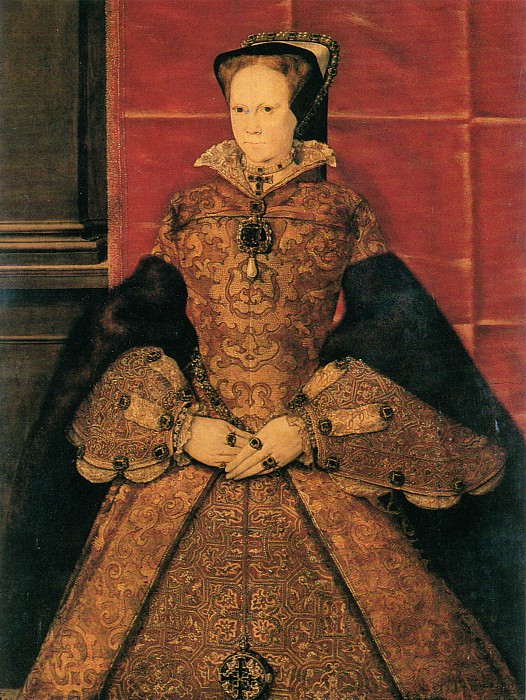
Have you missed any of the great articles, interviews, and excerpts that have been a part of the Queen of Martyrs blog tour? Get caught up right here!

We begin with a spot at The Writing Desk of fellow author Tony Riches, where I address reader expectations of 'Bloody Mary'.

"Why 'Bloody Mary'?" at The Writing Desk

Next, some surprising similarities between the much loved Katherine of Aragon and her daughter at EHFA.

"Mary I: Her Mother's Daughter" at English Historical Fiction Authors

This one includes an excerpt! And a look at the complicated relationship between Mary and her cousin, Lady Jane Grey

"Mary and Jane: Reluctant Rivals" at Lady Jane Grey Reference Guide

Ever wondered about the person behind the books? Suzy Henderson interviewed me for her blog.

"Interview with Author Samantha Wilcoxson" at  Blog of Suzy Henderson

Just for fun! What if Mary had chosen someone else to be her husband?

"Mary and Reginald: What Could Have Been?" at Tudors Dynasty

Another fun stop - I got to 'interview' one of my favorite secondary characters from Queen of Martyrs: Frances Waldegrave.

"An Interview with Frances Waldegrave" at History Imagined

Readers might be surprised by this look at the relationship and similarities of character between Mary and her more favored sister, Elizabeth.

"What Elizabeth Learned from Mary" at Blog of Judith Arnopp

Finally, I was a guest of book blogger Poppy Coburn with a post regarding what Queen of Martyrs is truly about - exposing the real Queen Mary behind the myths and misconceptions.

"Exposing the Real 'Bloody Mary'" at Blog of Poppy Coburn


Now for the BOOK REVIEWS! 


Two blogs have also featured beautiful reviews of Queen of Martyrs:

Troy Rodgers at Knight of Angels
He's the one who convinced me to write it! Talk about pressure!

Sharon Connolly at History- The Interesting Bits
Sharon has her own book coming out soon: Heroines of the Medieval World - I can't wait to get my hands on it and find more wonderful women to write about!

You can also find several brilliant reviews for my Mary at Goodreads, Amazon, & Amazon UK.

Have you written a review? Please link it in the comments below!!

Don't want to miss anything? Follow me on Facebook, Twitter, Goodreads, or Instagram.

One more thing....if you ever want to find articles I have written for other websites/blogs, you can find them here.

Whew! It's been a busy month! Thank you for your support!